Key Takeaways
- Lower back problems are common in pickleball, as players spend much of a game bent forward in a ready stance and rotate their spines to hit the ball.
- Reaching down for low balls and picking them up off the court can strain the back. Low back strains and herniated discs are among the pickleball injuries most commonly seen at spine clinics.
- In Traditional Chinese Medicine, the lower back is considered the home of the Kidneys. Repeated bending and twisting can cause Qi and Blood to stagnate in the Bladder channel that runs along the spine.
- Nine acupressure points on the lower back, hips, legs, and hands may help relieve muscle strain and stiffness. Two hand points are traditionally used while gently moving a strained back.
- Numbness or weakness in a leg, numbness in the groin, or difficulty controlling the bladder or bowels requires emergency care.
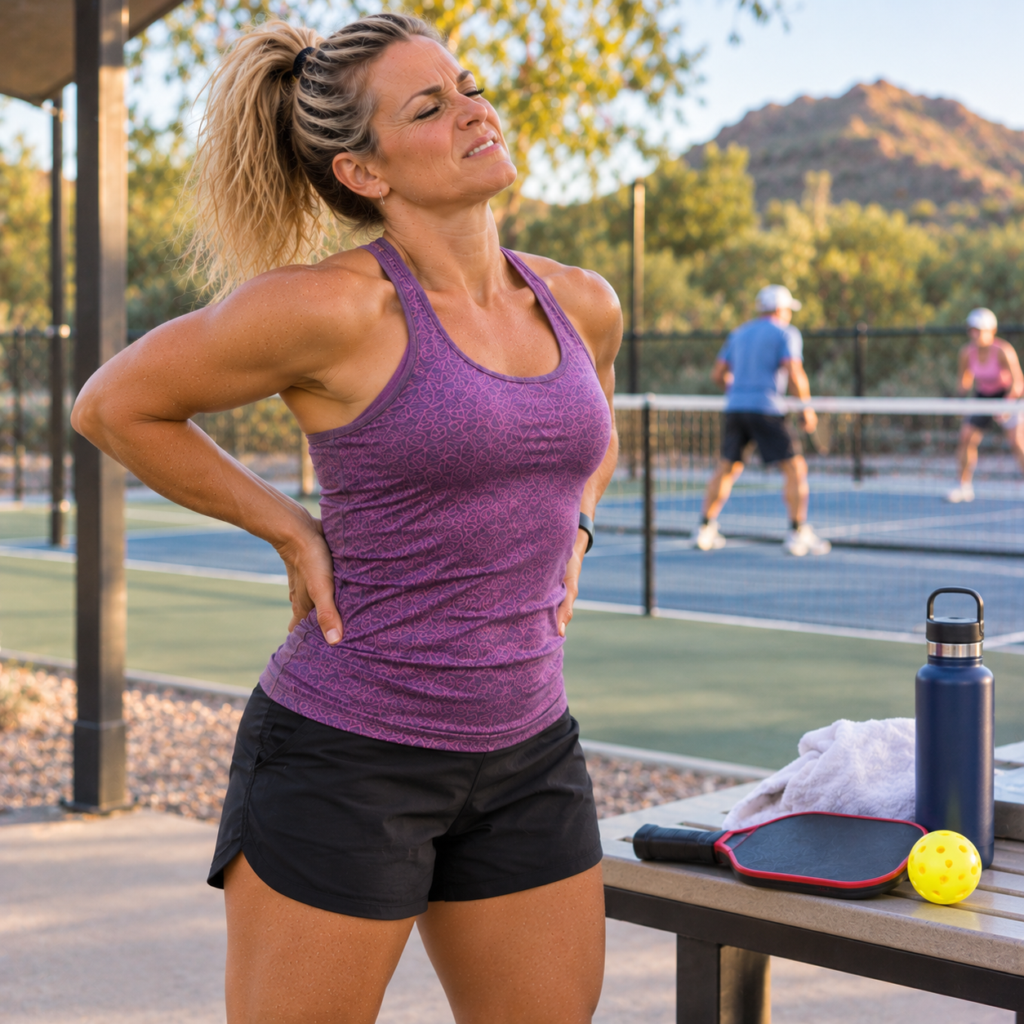
Watch pickleball for a few minutes, and you’ll quickly notice the players’ posture. They crouch with bent knees, lean forward, and hold their paddles up, staying in this stance for much of the game. They bend low to reach dinks, twist their torsos for crosscourt shots, and stoop to pick up balls between points. It may not feel like hard work at the time, but the next morning can bring a stiff, aching lower back that takes a while to loosen up.
HonorHealth sports medicine orthopedic surgeon Kristen Maskala, MD, says lower back problems are fairly common in pickleball. Players spend much of the game with their spines somewhat flexed, and hitting the ball requires rotating through the back. Falls on the hard court can also leave the back stiff. Yash Mehta, MD, a sports medicine physician at the Virginia Spine Institute, says low back strains and herniated discs are among the most common pickleball injuries his team treats. He notes that repeatedly bending to pick up or hit the ball can strain the back, especially as players get older.
Most of this pain comes from tired muscles and stiff joints, which usually ease with rest, gentle movement, and regular care. Spending a few minutes pressing the muscles along the spine after playing can help loosen them before they stiffen overnight.
In Traditional Chinese Medicine, the lower back is considered the home of the Kidneys. The Bladder channel runs along both sides of the spine, and the Governing Vessel runs down its center. Hours of bending and twisting can strain these channels and cause Qi and Blood to stagnate in the lower-back muscles. A sudden, awkward lunge may bring on sharp, fixed pain. By contrast, a slow ache that develops over a season and eases as you warm up often suggests that Kidney energy has weakened with age and no longer supports the back as well. Playing in the cold, especially in the early morning, can worsen either type of pain.
The nine points listed below start at the lower back and hip, travel down the backs of the legs, and finish with three points on the hands and inner ankle.
What Acupressure Points to Press and Why
1. Press on BL23 at waist level to strengthen the lower back. BL23 sits on the lower back, two finger-widths out from the spine on each side, level with the bottom of the ribs at the waist. Place your hands on your hips with your thumbs pointing toward the spine and press firmly for one to two minutes, or lie on a tennis ball placed under each point. BL23 is called “Shenshu,” the “Kidney Shu.”
BL23 is the back transport point of the Kidneys, where Kidney energy gathers in the back. It is the primary point for a lower back that aches, tires easily, and feels weak, a classic pattern in an older player after a long session.
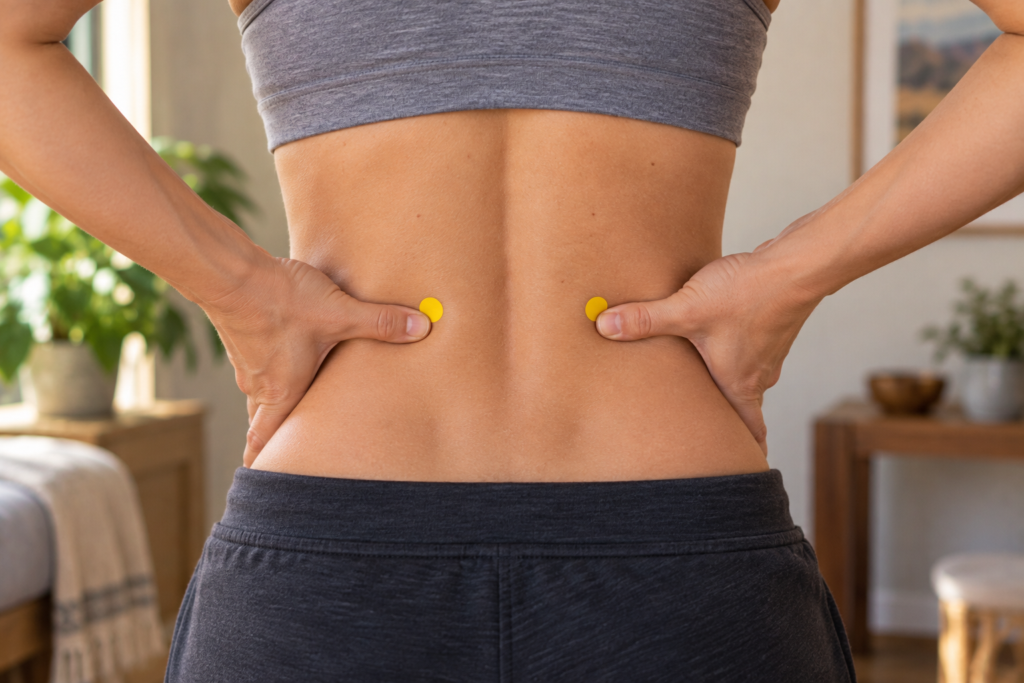
2. Press on BL52 at the outer edge of the back muscles to release twisting strain. BL52 sits on the lower back at the same level as BL23, about four finger-widths out from the spine, at the outer edge of the long muscles that run beside it. Press firmly with your thumbs for one to two minutes on each side. BL52 is called “Zhishi,” the “Room of the Will.”
BL52 lies over the deep muscle that tightens on one side as the torso turns and bends. It is often tender after a crosscourt drive or an awkward reach, and can help relieve one-sided back pain.
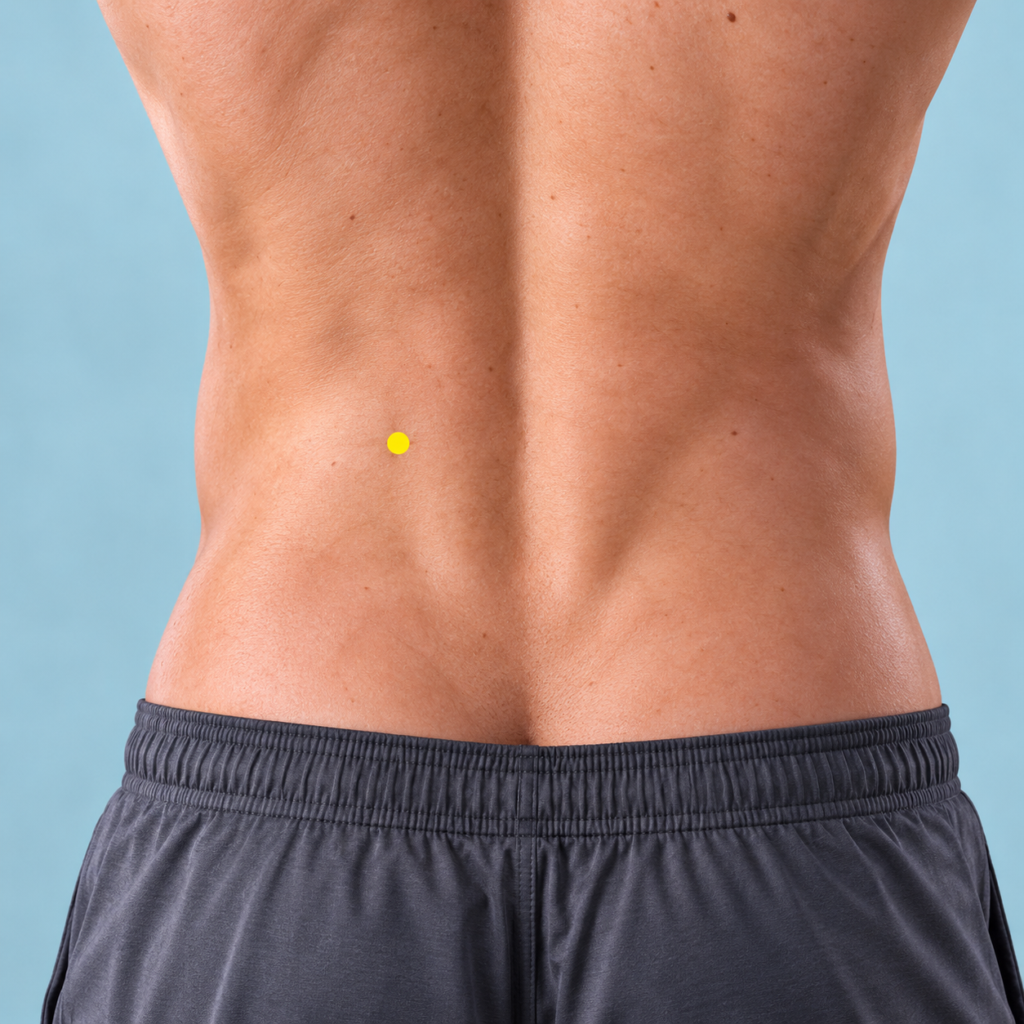
3. Press on BL25 at the level of the hip bones to ease pain low in the back. BL25 sits on the lower back, two finger-widths out from the spine on each side, level with the top of the hip bones. Press firmly with your thumbs for one to two minutes, or use a tennis ball against a wall. BL25 is called “Dachangshu,” the “Large Intestine Shu.”
BL25 is a key local point for pain and stiffness in the lowest part of the back, the area that bears the load whenever a player bends forward to dig out a low ball.
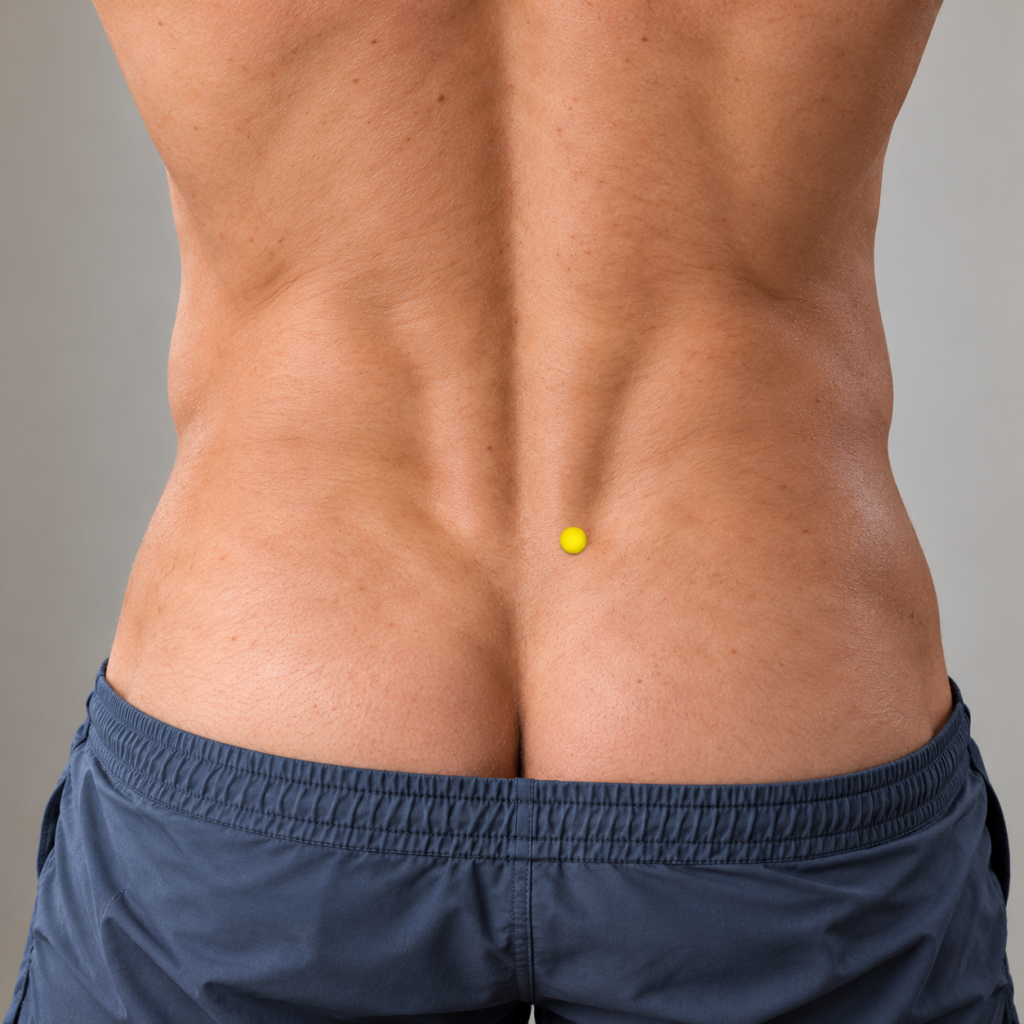
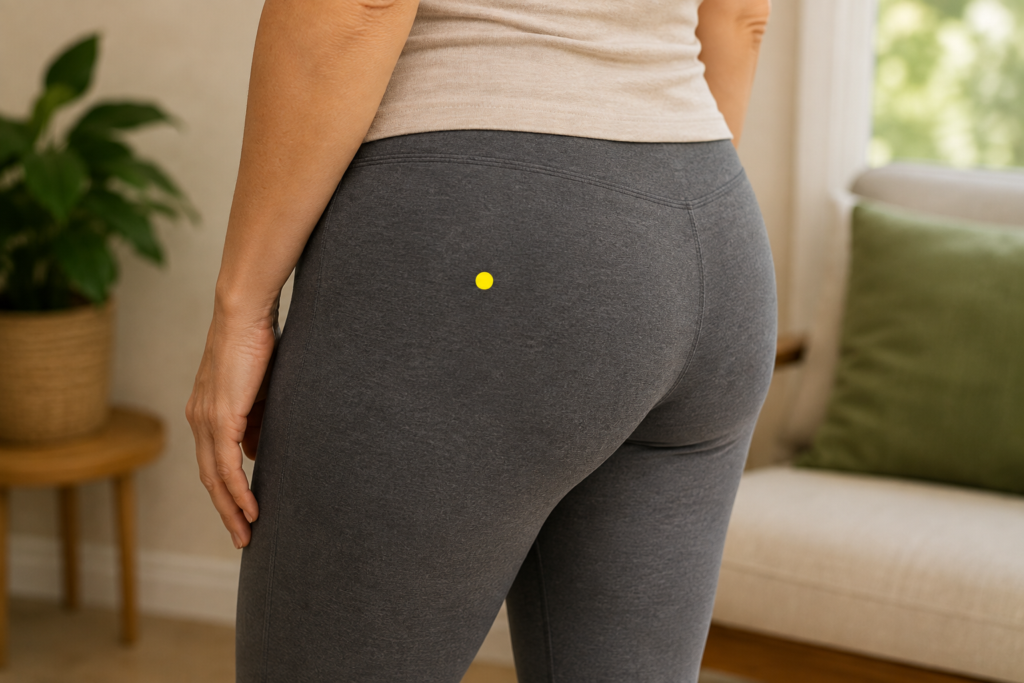
4. Press on GB30 in the buttock to release the hip and lower back. GB30 sits on the side of the buttock, about one-third of the way from the bony bump at the top of the outer thigh to the base of the spine. Lie on a tennis ball placed under the point, or press firmly with your thumb, for one to two minutes on each side. GB30 is called “Huantiao,” the “Jumping Circle.”
GB30 is a primary point for pain that radiates from the lower back through the hip and down the leg. The gluteal muscles are often tight and pull on the lower back; releasing them often relieves the back.
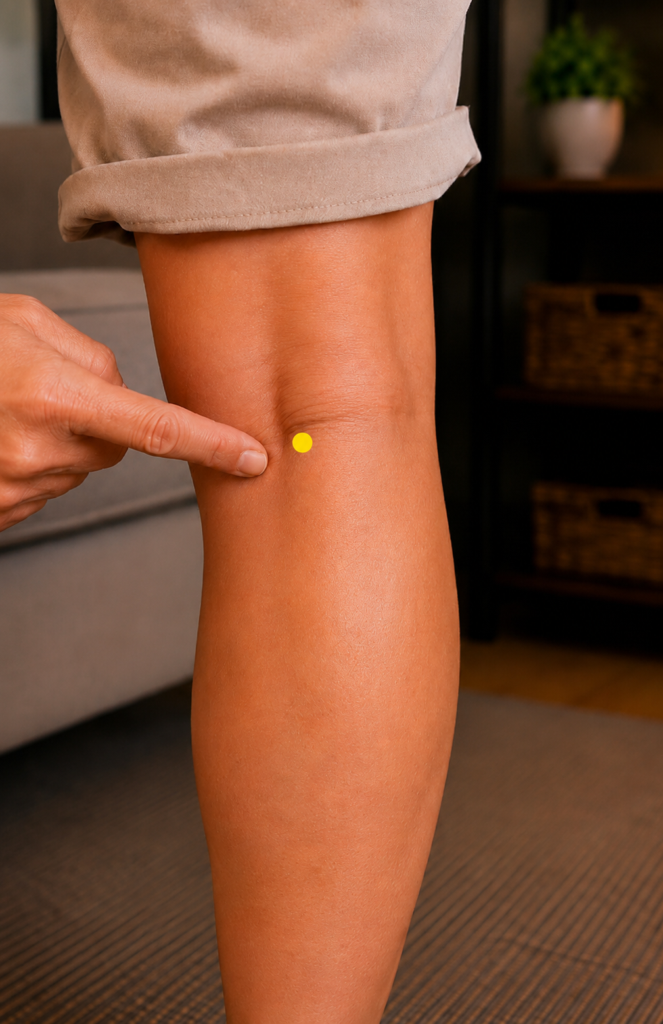
5. Press on BL40 behind the knee to relieve back pain from a distance. BL40 sits in the middle of the crease at the back of the knee, between the two tendons. Sit with the knee slightly bent and press with moderate pressure using your fingertips for one to two minutes on each leg. BL40 is called “Weizhong,” the “Middle of the Crook.”
In Traditional Chinese Medicine, BL40 is the command point of the back and one of the most important distal points for low back pain. The Bladder channel runs from the lower back straight down to BL40, making it easy to reach when bending to the back itself is uncomfortable.
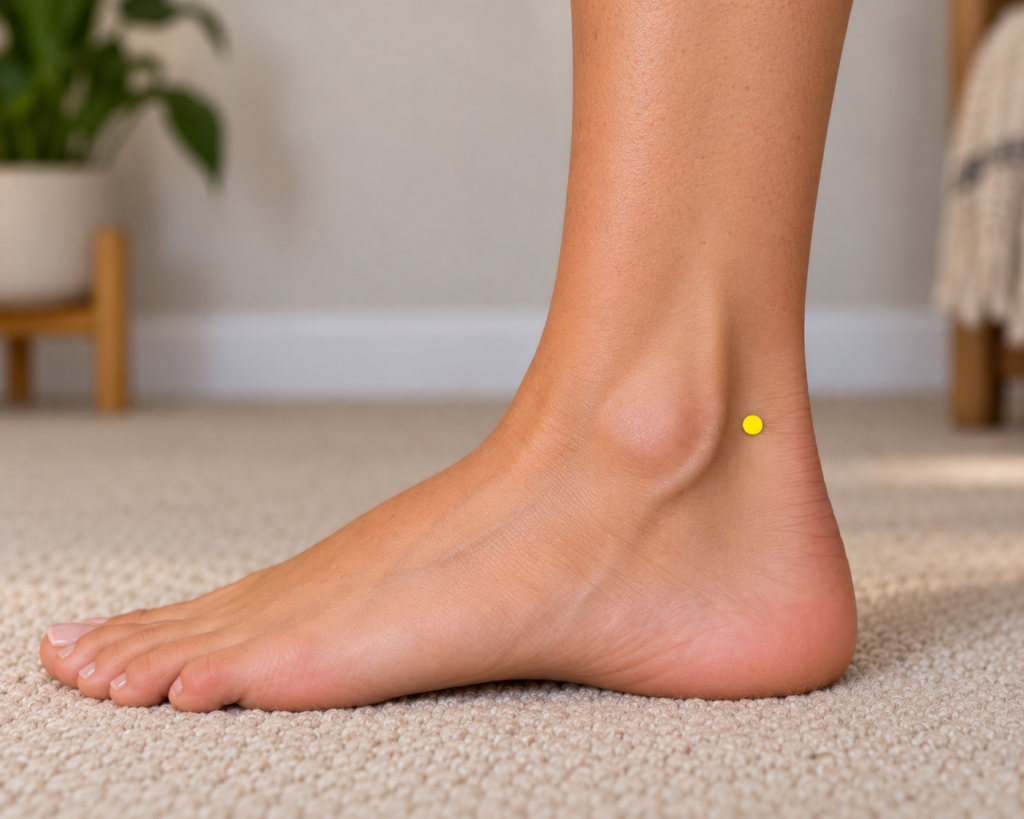
6. Press on BL60 behind the outer ankle to ease stiffness along the spine. BL60 sits in the hollow between the tip of the outer ankle bone and the Achilles tendon. Press firmly with your thumb for one to two minutes on each ankle. BL60 is called “Kunlun,” the “Kunlun Mountains.” BL60 is avoided during pregnancy.
BL60 is near the end of the same Bladder channel that runs down the back. It’s a classic point for low back pain and spinal stiffness, especially stiffness on waking.
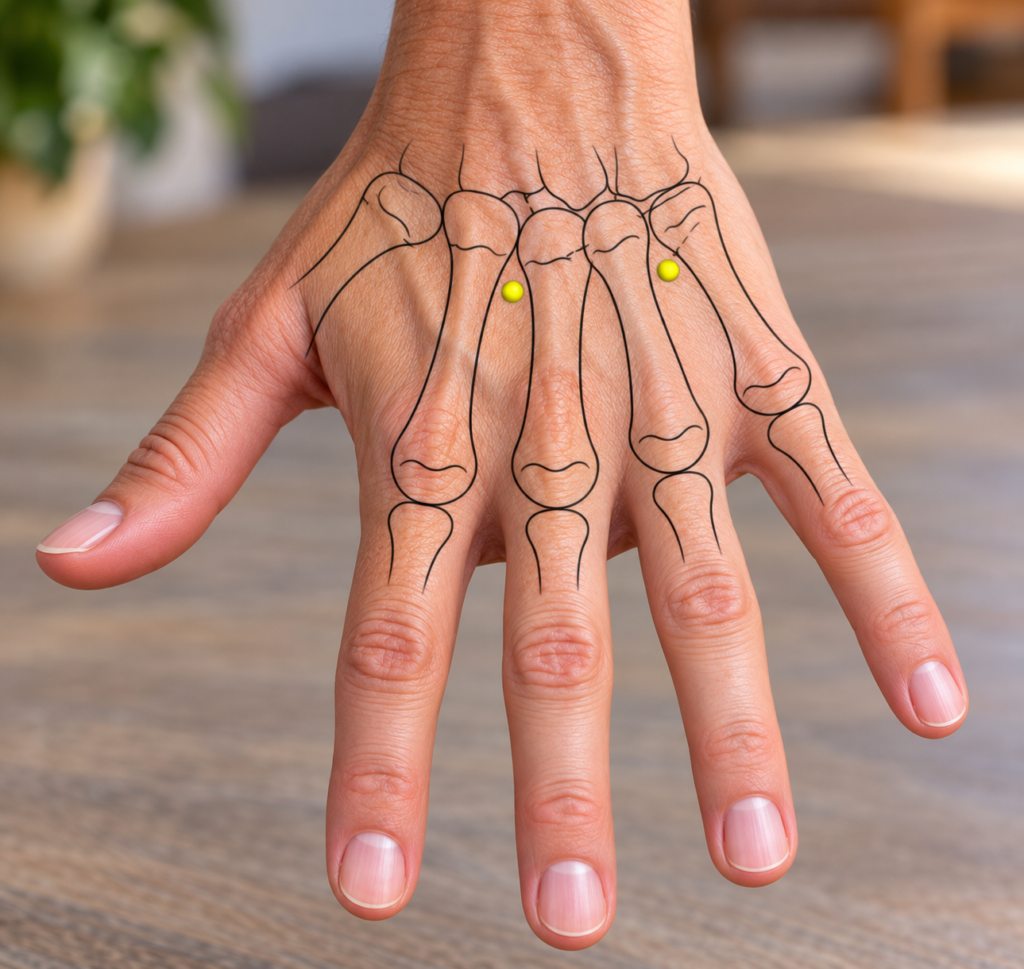
7. Press on Yaotongxue on the back of the hand while gently moving the back. Yaotongxue is a pair of points on the back of each hand. One sits in the hollow between the bones of the index and middle fingers, and the other between the bones of the ring and little fingers, both just in front of where the bones meet near the wrist. Press both points on one hand with your thumb and middle finger for one to two minutes while slowly bending and turning the lower back within a comfortable range, then switch hands. Yaotongxue means “Lumbar Pain Point.”
Yaotongxue is an extra point used for sudden low back strain. Pressing it while gently moving the back is a well-known empirical technique, particularly useful immediately after an awkward lunge when the back is too sore to touch.
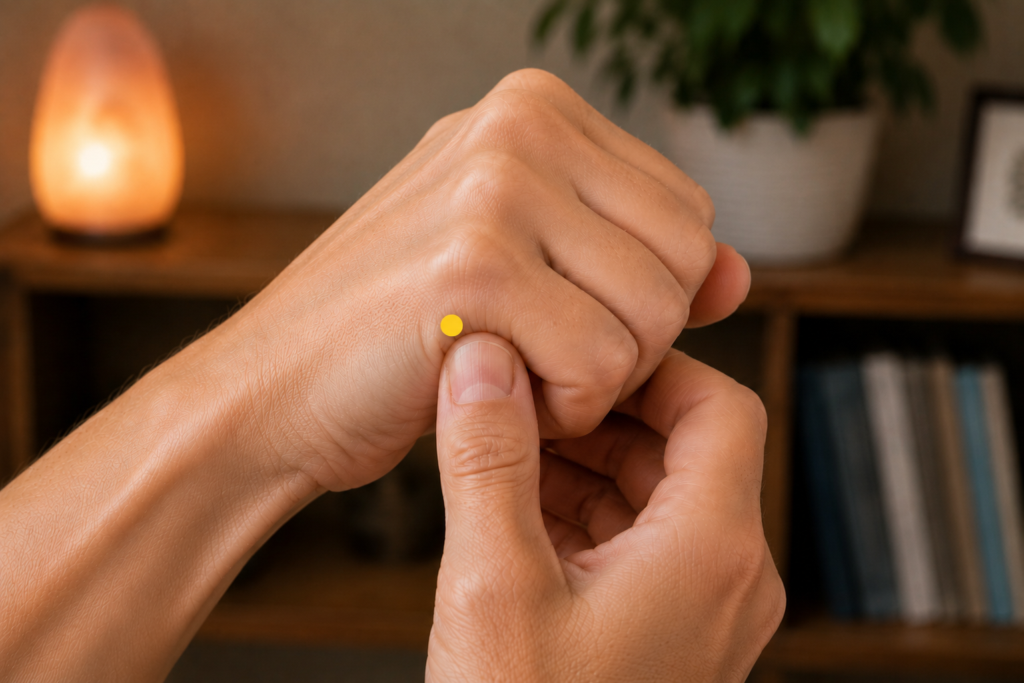
8. Press on SI3 on the side of the hand to loosen a stiff spine. SI3 sits on the outer edge of the hand, on the little finger side. Make a loose fist, and the point is at the end of the crease just behind the knuckle of the little finger. Press firmly with the thumb of your other hand for one to two minutes on each hand, while slowly moving the back. SI3 is called “Houxi,” the “Back Stream.”
SI3 is the Governing Vessel’s opening point, on the channel that runs along the spine. It is used for acute back strain and stiffness and pairs naturally with Yaotongxue.
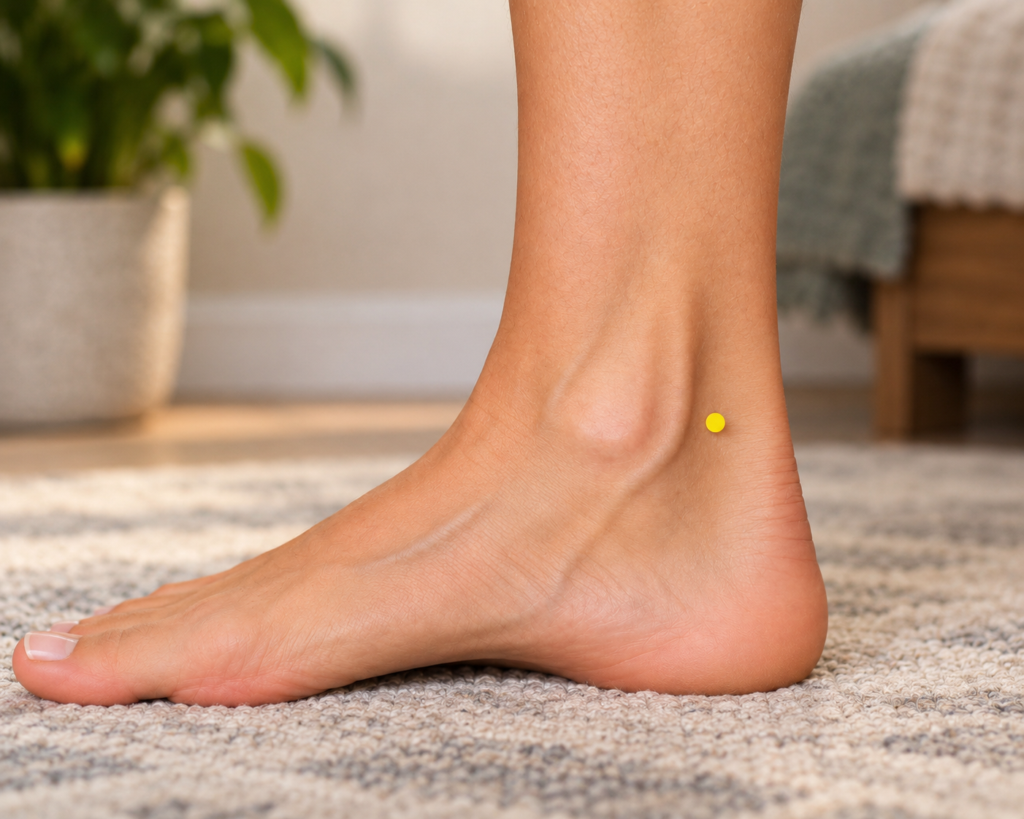
9. Press on KI3 behind the inner ankle bone to support the Kidneys. KI3 sits in the hollow between the tip of the inner ankle bone and the Achilles tendon. Press with moderate pressure for one to two minutes on each ankle. KI3 is called “Taixi,” the “Great Stream.”
KI3 is the Kidney’s source point. It strengthens the lower back from within and is suited to a dull, recurring ache that appears after long sessions and returns season after season.
Why These Acupressure Points Work
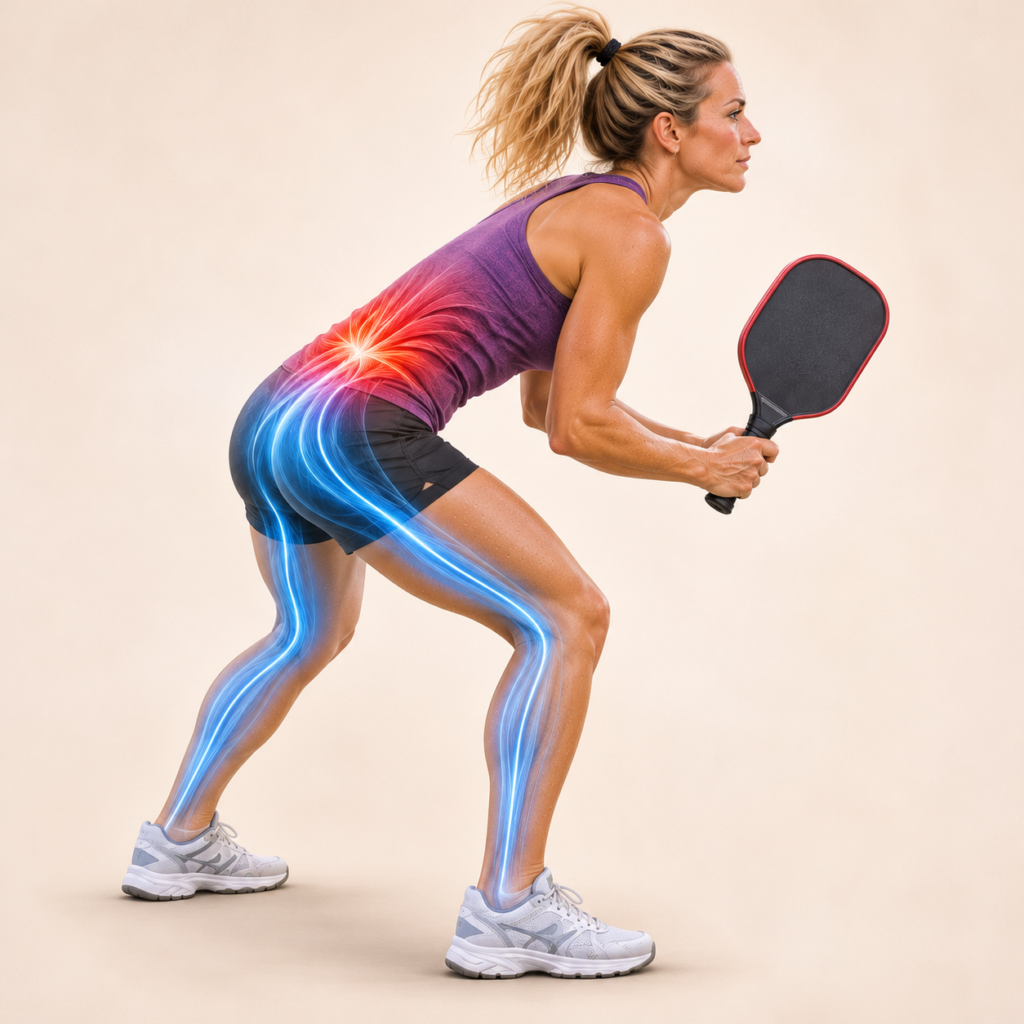
From a Traditional Chinese Medicine perspective, pickleball-related back pain comes from two factors working together. A bent-forward stance and repeated twisting strain the lower-back channels, restricting the free flow of Qi and Blood through the muscles. Meanwhile, age-related weakening of Kidney energy makes the back less able to recover between games. Treatment relaxes the muscles along the spine, clears stagnation from the Bladder channel, and strengthens Kidney support to help keep the back steady for the next session.
The nine points work together to relieve and support the lower back:
- BL23, BL52, and BL25 work directly on the muscles of the lower back.
- GB30 releases the hip and buttock muscles that pull on the back.
- BL40 and BL60 relieve back pain from below along the Bladder channel.
- Yaotongxue, SI3, and KI3 ease a sudden strain and strengthen the back over time.
How to Properly Use These Acupressure Points

For pickleball-related back pain, acupressure works best immediately after playing and once or twice daily as your back recovers.
- For an acute strain, begin by applying pressure to Yaotongxue and SI3 on the hands while slowly bending and rotating the lower back within a comfortable range of motion.
- Next, apply pressure to BL40 and BL60 on the legs, followed by BL23, BL52, BL25, and GB30, using your thumbs or a tennis ball against a wall or the floor. Conclude with KI3.
- Apply firm pressure to the muscles alongside the spine and in the buttocks, but avoid pressing directly on the spinal bones. Reduce the pressure if it causes pain or tingling to radiate down a leg.
- Repeat once or twice daily for at least four to six weeks. If your back aches after each session, include BL23, BL40, and KI3 in your regular routine.
How you move on the court matters as much as what you do afterward. For low balls, bend at your hips and knees rather than rounding your lower back. When possible, stay close to the kitchen line so more balls reach you in front of your body. Warm up for five to ten minutes, or longer if you’re older or returning from a break. Try lateral shuffles, walking lunges, and hip openers. A ball retriever that clips onto your paddle or picks up balls from the court can save you from bending over repeatedly during each session. Doing core and hip-strengthening exercises a few times a week can help your back handle rotation. If you develop a new strain, ice the area for the first day or two to reduce inflammation, then switch to heat to keep Qi and Blood moving.
You can learn more about preventing back pain by practicing healthy posture.
When to Get Professional Help
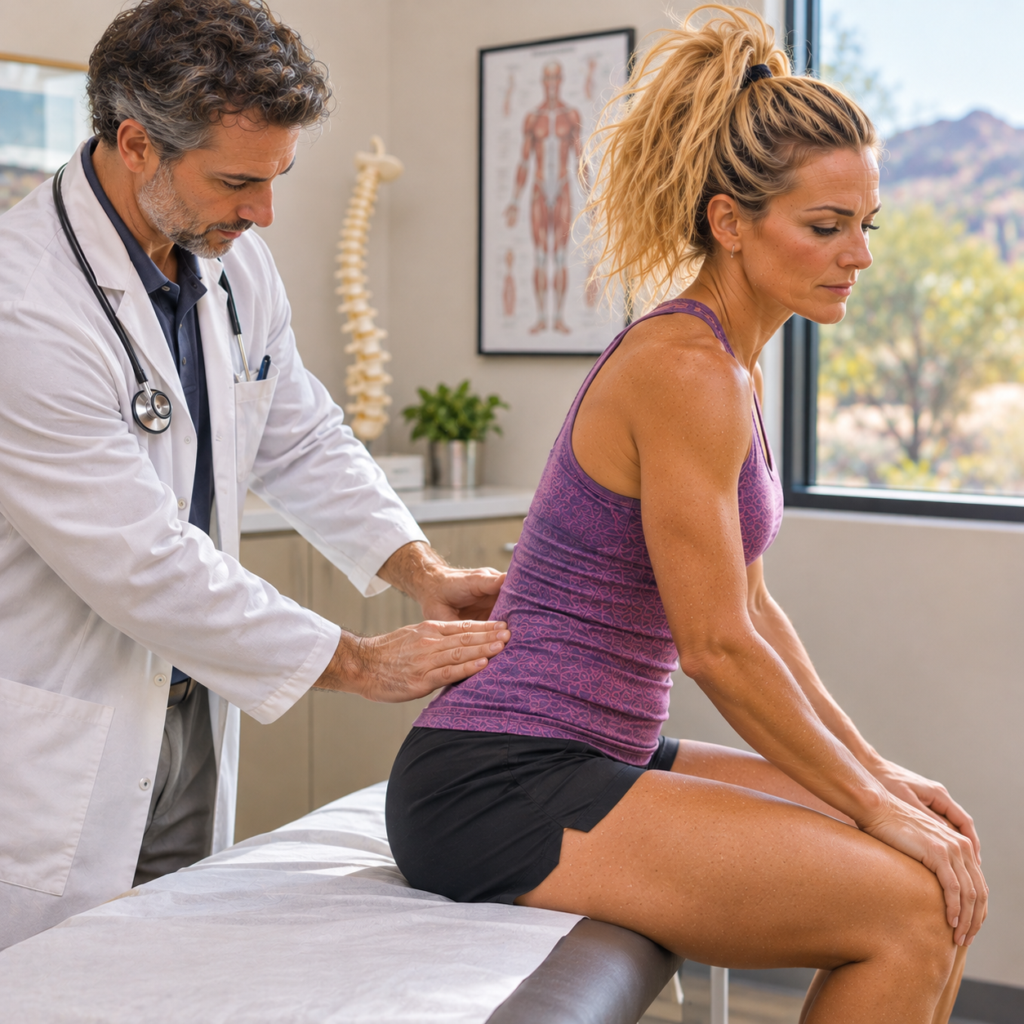
Seek emergency care if you have numbness in your groin or inner thighs, new trouble controlling your bladder or bowels, or weakness in both legs. These symptoms may mean the nerves at the base of your spine are compressed. See a doctor right away if you have back pain with numbness, tingling, or weakness in your leg or foot, pain that shoots below your knee, or a foot that drags or slaps when you walk. These may be signs of a herniated disc. If you have back pain after a fall, get checked, especially if you’re older or have osteoporosis, because you may have a spinal fracture. You should also see a doctor if your back pain comes with a fever, unexplained weight loss, pain that worsens at night or while you’re lying still, or lasts more than a few days without improving.
Acupressure is a gentle, supportive practice for pickleball back pain. It complements, and does not replace, diagnosis and medical care.
For related health concerns, acupressure for lower back pain, acupressure for sciatica, and acupressure for sacroiliac joint pain are companion articles.
Other posts in the pickleball series include acupressure for pickleball knee pain, acupressure for pickleball shoulder pain, acupressure for pickleball elbow, acupressure for pickleball wrist pain, acupressure for pickleball ankle pain, and top acupressure points for pickleball players.
Above and Beyond Acupuncture offers acupuncture, cupping, and lifestyle coaching at the North Frank Lloyd Wright Boulevard location in Scottsdale.
Schedule an appointment online to start your healing journey.
The points above are only as effective as the technique used to apply them. Where to press, how firmly, and for how long all affect the result. For a full breakdown of how to perform acupressure properly at home, read Performing Acupressure in 3 Easy Steps.

About the Publisher
Paul Kerzner, L.Ac., is a licensed acupuncturist and board-certified herbalist, as well as the founder of Above and Beyond Acupuncture in Scottsdale. His own journey from chronic patient to practicing acupuncturist shapes his commitment to providing honest, clinically grounded information about acupuncture and Traditional Chinese Medicine. Learn more about Paul and his clinical approach on the About Us page.