Key Takeaways
- Hand pain often results from overuse, such as typing, gripping tools, or scrolling on a phone, as well as from arthritis, tendon problems, and pinched nerves.
- In Traditional Chinese Medicine, sore, stiff hands reflect Qi and Blood not reaching the fingertips, Cold or Dampness settling in the joints, or a shortage of Blood to nourish the tendons.
- Nine acupressure points on the forearm, wrist, palm, and back of the hand help relieve aching, stiffness, and tension in the hands and fingers.
- Regular breaks, gentle stretches, and keeping the hands warm help the points function.
- Sudden swelling, a hand that turns cold or pale, or numbness and weakness that keep getting worse require medical care.

At first, it’s easy to dismiss the signs. A jar lid may refuse to budge, a coffee mug can feel oddly heavy, or your fingers may need a minute to loosen up before gripping the steering wheel in the morning. After a long day at the keyboard, your palms might ache and your knuckles feel stiff. Some people notice more pain in cold weather, while others feel it after gardening, painting, or carrying kids over the weekend.
According to Johns Hopkins Medicine, common causes of hand pain include arthritis, carpal tunnel syndrome, ganglion cysts, and tendon problems such as tendonitis, de Quervain’s tenosynovitis, and trigger finger. Osteoarthritis often develops after years of regular hand use or from an old injury, while rheumatoid arthritis can affect joints throughout the body. Tendon problems usually result from strain, overuse, or injury. Johns Hopkins also notes that carpal tunnel syndrome can be mistaken for tendonitis or arthritis, so numbness and tingling in the fingers should always be evaluated by a doctor.
Much of the hand pain experienced in everyday life does not fit neatly into these diagnoses. The forearm muscles that move the fingers can become tense and fatigued as a result of repetitive tasks. The small joints in the fingers may stiffen when held in one position for extended periods. Cold weather constricts the blood vessels in the hands, and stiff fingers may become painful.
Traditional Chinese Medicine views the hands as where six main channels meet: three Yin channels end at the fingertips, and three Yang channels begin there. This makes the hands sensitive to anything that slows the flow of Qi and Blood. Repetitive movements and gripping can cause Qi and Blood to pool, leading to sharp, fixed pain and tight muscles. Cold can make the joints ache and stiffen, while Dampness can leave the fingers puffy and heavy, often worse in damp weather or first thing in the morning. The Liver stores Blood and nourishes the tendons, so low Blood can cause the fingers to cramp, stiffen, and lose strength. With age, weakened Kidney energy can add a deep ache in the joints.
The nine points below begin on the forearm, continue to the wrist, and end on the palm and back of the hand.
What Acupressure Points to Press and Why
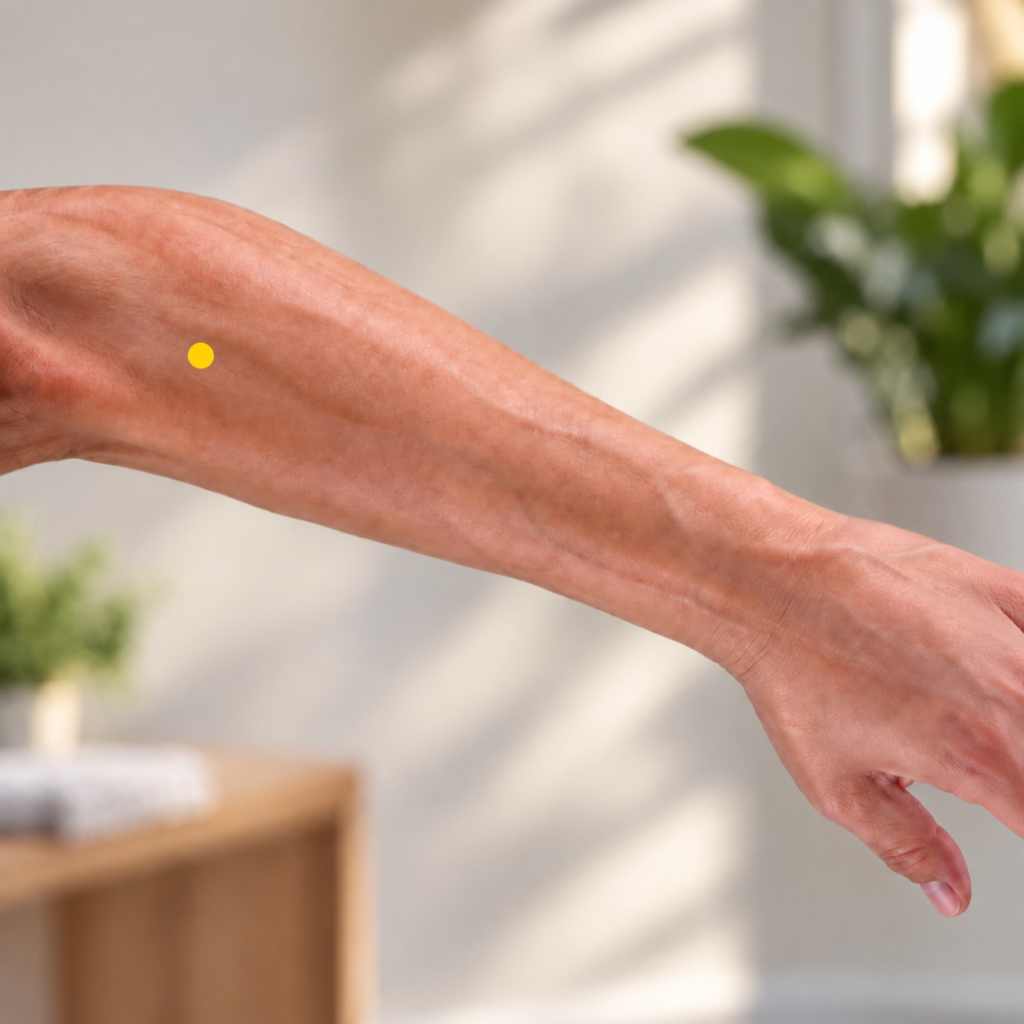
1. Press on LI10 on the forearm to release tight gripping muscles. LI10 sits on the top of the forearm, on the thumb side, three finger-widths below the outer end of the elbow crease when the elbow is bent. Press firmly with the thumb of your other hand for one to two minutes on each arm. LI10 is called “Shousanli,” the “Arm Three Miles.”
LI10 relaxes the forearm muscles that open and close the fingers. Tension in this area can pull on the wrist and hand, so releasing it may help ease hand aches caused by typing, using tools, or simply holding a phone.
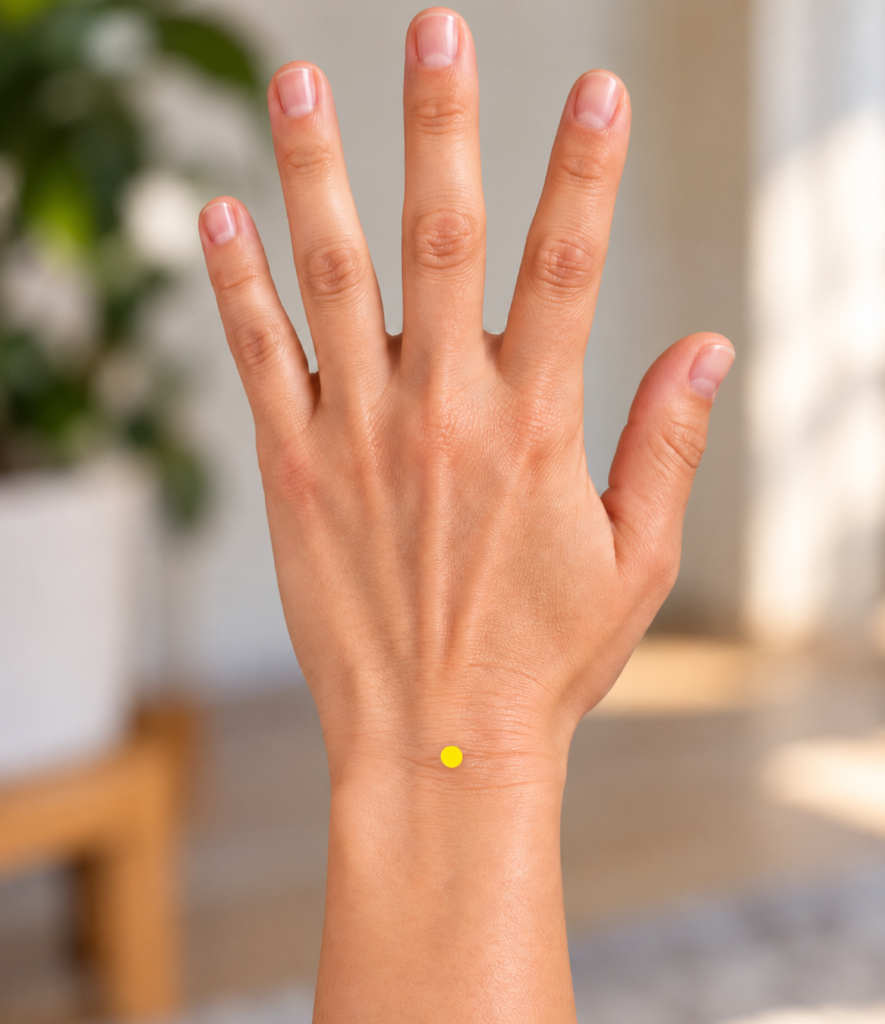
2. Press on TE4 on the back of the wrist to ease wrist and hand stiffness. TE4 sits on the back of the wrist crease, in the hollow just to the little finger side of the tendon that runs toward the ring finger. Press with moderate pressure for one to two minutes on each wrist. TE4 is called “Yangchi,” the “Yang Pool.”
TE4 is the source point of the Triple Energizer. It relieves stiffness and pain in the wrist and the back of the hand, and it is used when the hands are cold, weak, and take a long time to warm up.
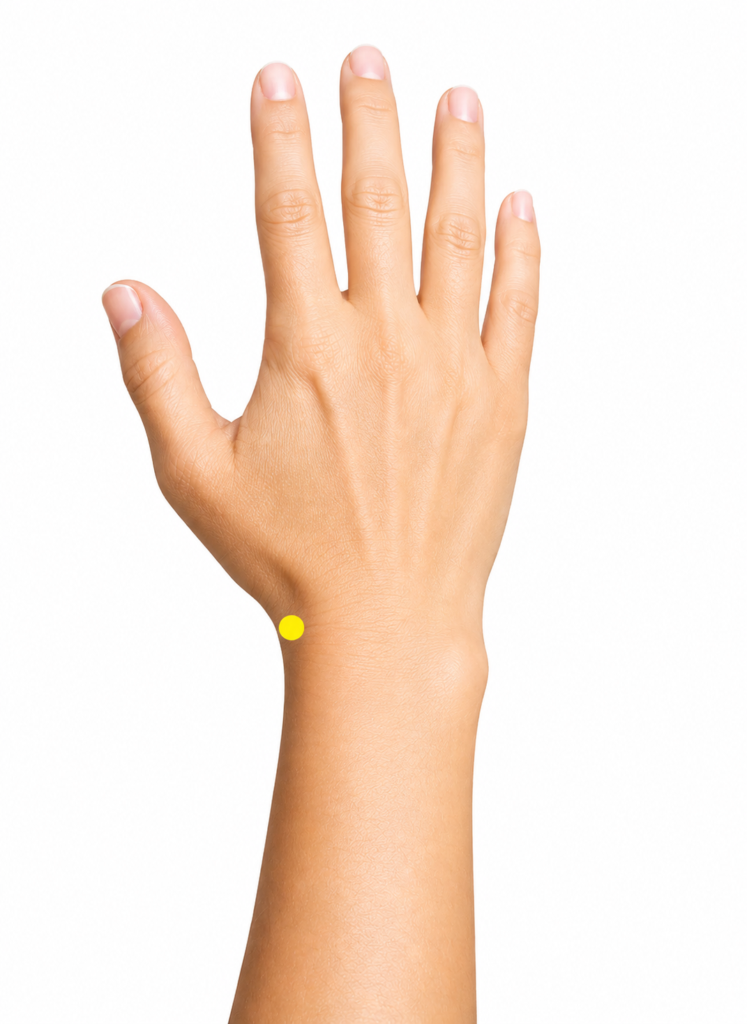
3. Press on LI5 at the base of the thumb to relieve thumb and wrist pain. LI5 sits on the thumb side of the wrist, in the small hollow that forms between two tendons when the thumb is lifted up and back. Press with moderate pressure for one to two minutes on each wrist. LI5 is called “Yangxi,” the “Yang Stream.”
LI5 helps relieve pain at the base of the thumb and along the thumb side of the wrist. It can ease aching after pinching, gripping, or texting.
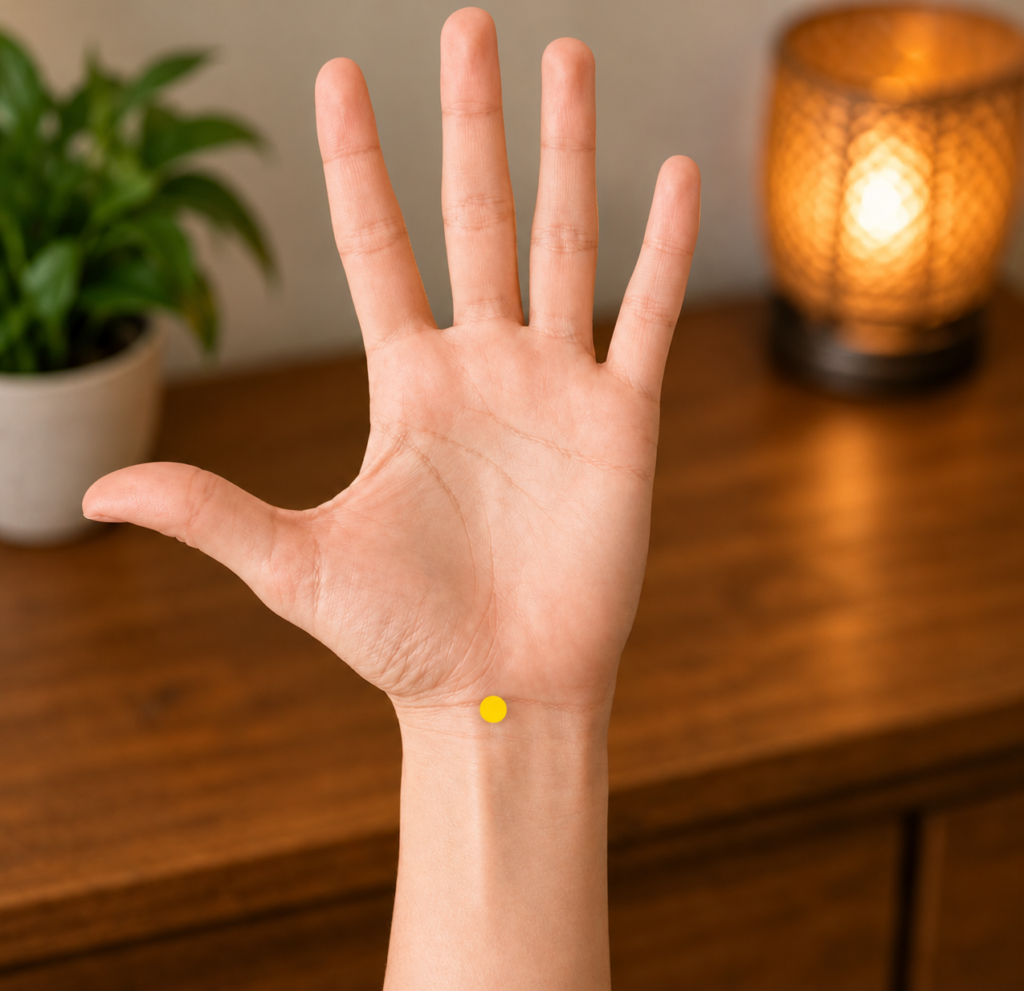
4. Press on PC7 at the inner wrist crease to calm pain in the palm. PC7 sits at the middle of the inner wrist crease, between the two tendons. Press gently with the thumb of your other hand for one to two minutes on each wrist. PC7 is called “Daling,” the “Great Mound.”
PC7 is the Pericardium’s source point. It eases pain and heat in the palm and inner wrist and can help soothe hands aching after long hours of detailed, focused work.
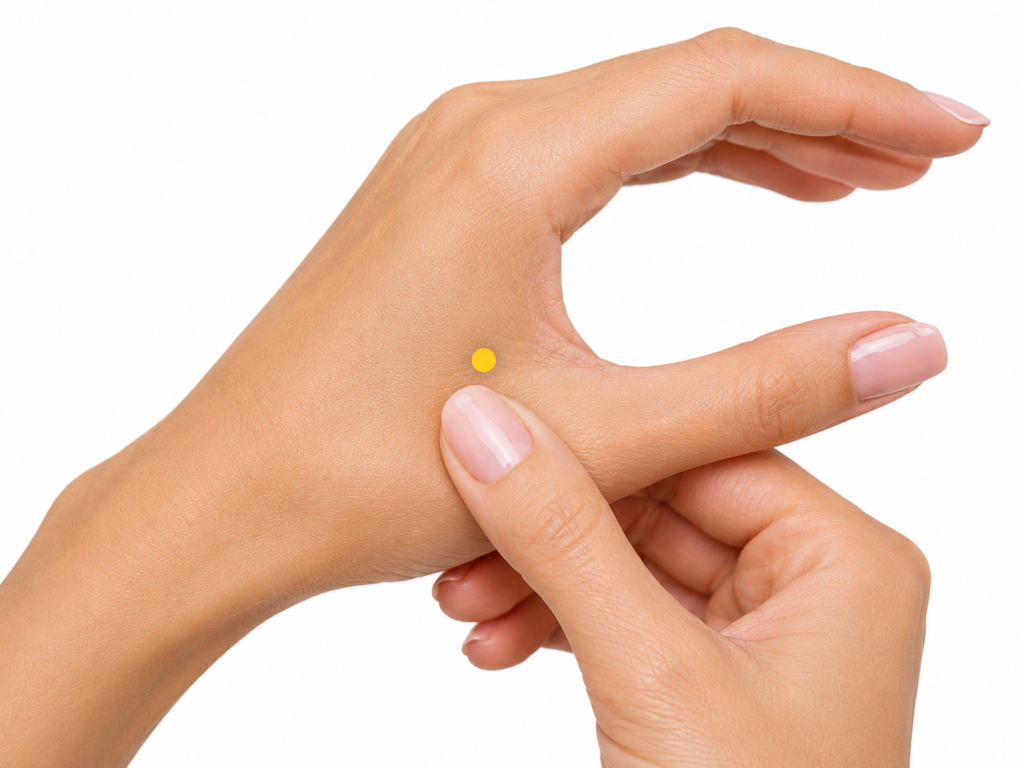
5. Press on LI4 on the back of the hand to ease pain throughout the hand. LI4 sits on the back of the hand, in the web between the thumb and index finger, on the highest point of the muscle when the thumb and index finger are pressed together. Press firmly with the thumb of your other hand for one to two minutes on each hand. LI4 is called “Hegu,” the “Joining Valley.” LI4 is avoided during pregnancy.
LI4 is the source point of the Large Intestine and one of Traditional Chinese Medicine’s most important points for pain. It helps move Qi and Blood throughout the hand and can relieve aching in the thumb, index finger, and web of the hand.
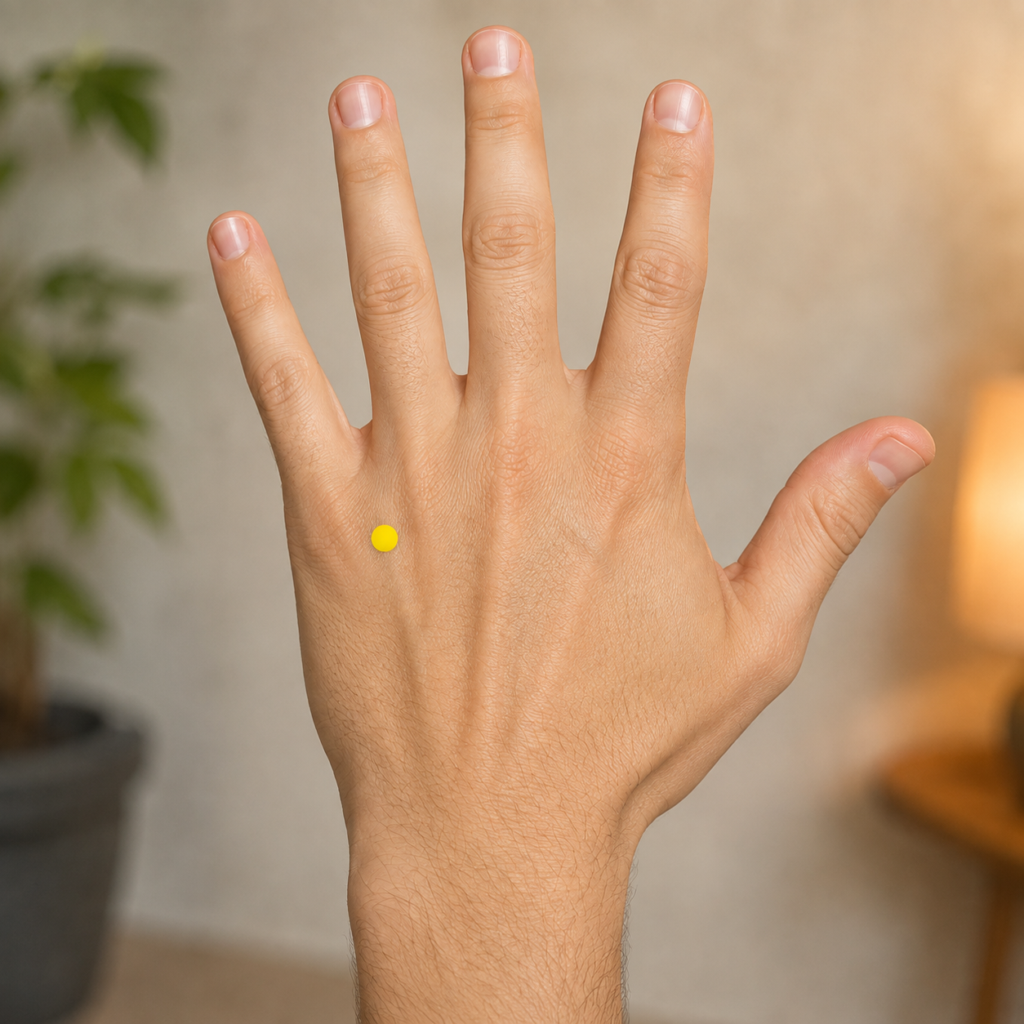
6. Press on TE3 on the back of the hand to free stiff fingers. TE3 sits on the back of the hand, in the hollow between the bones of the ring finger and little finger, just behind the knuckles, when the hand makes a loose fist. Press firmly with your thumb for one to two minutes on each hand. TE3 is called “Zhongzhu,” the “Central Islet.”
TE3 is traditionally used when the fingers will not bend or straighten easily. It helps relieve stiffness and pain on the back of the hand and in the ring and little fingers.
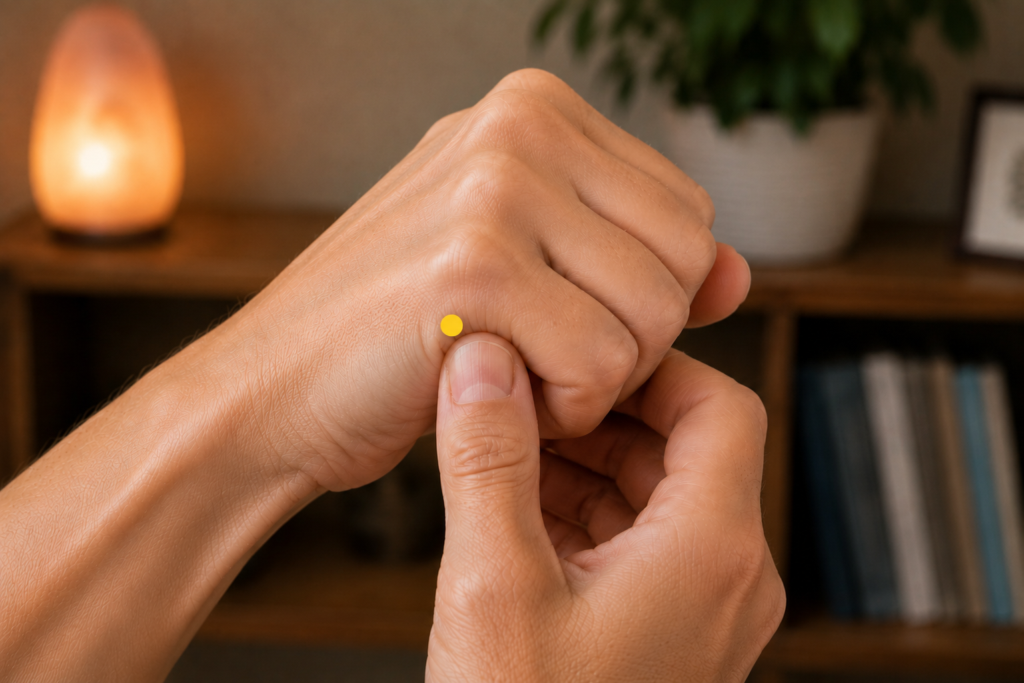
7. Press on SI3 on the outer edge of the hand to relieve finger pain and spasm. SI3 sits on the outer edge of the hand, just below the knuckle of the little finger, at the end of the crease that forms when the hand makes a loose fist. Press firmly with the thumb of your other hand for one to two minutes on each hand. SI3 is called “Houxi,” the “Back Stream.”
SI3 opens the Governing Vessel and relaxes the tendons. It is indicated for finger cramping, spasms, and pain, as well as pain that begins with neck and shoulder tension and travels down the arm into the hand.
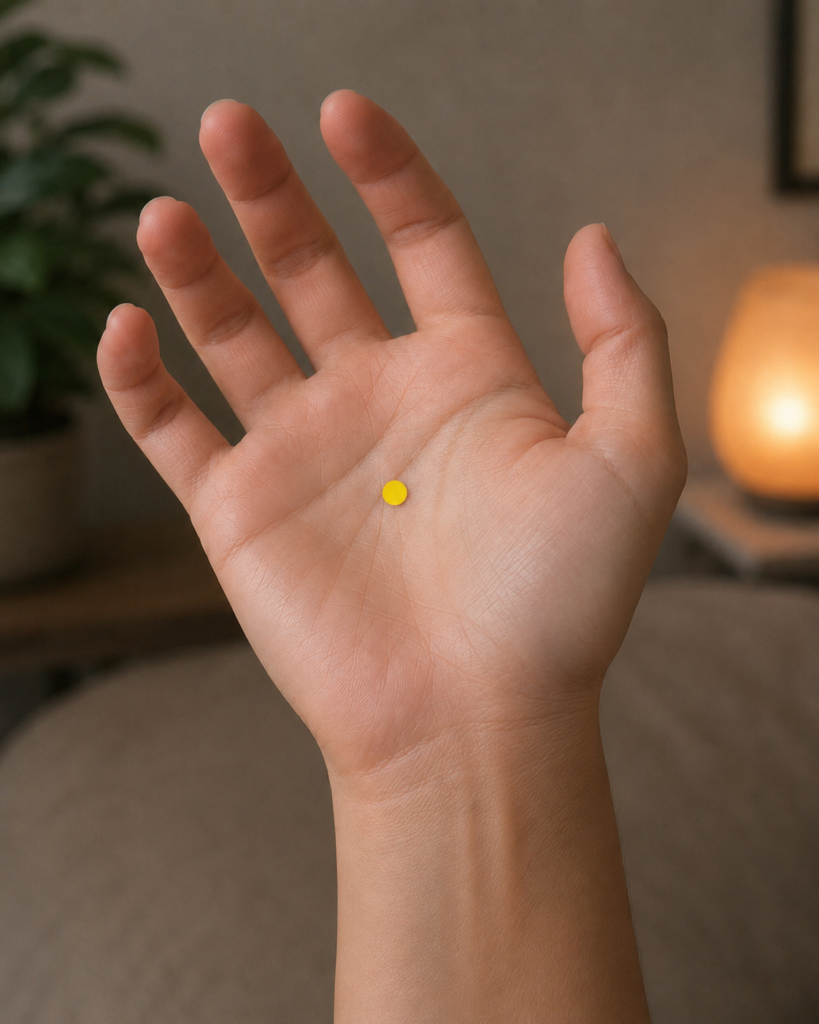
8. Press on PC8 in the center of the palm to relax the hand. PC8 sits in the center of the palm, between the bones of the index and middle fingers, where the tip of the middle finger touches when the hand makes a fist. Press firmly with the thumb of your other hand for one to two minutes on each palm. PC8 is called “Laogong,” the “Palace of Toil.”
PC8 is the Pericardium’s spring point. Its name reflects its role in soothing hands tired from work. It eases aching, heat, and tension in the palm, helping the whole hand relax.
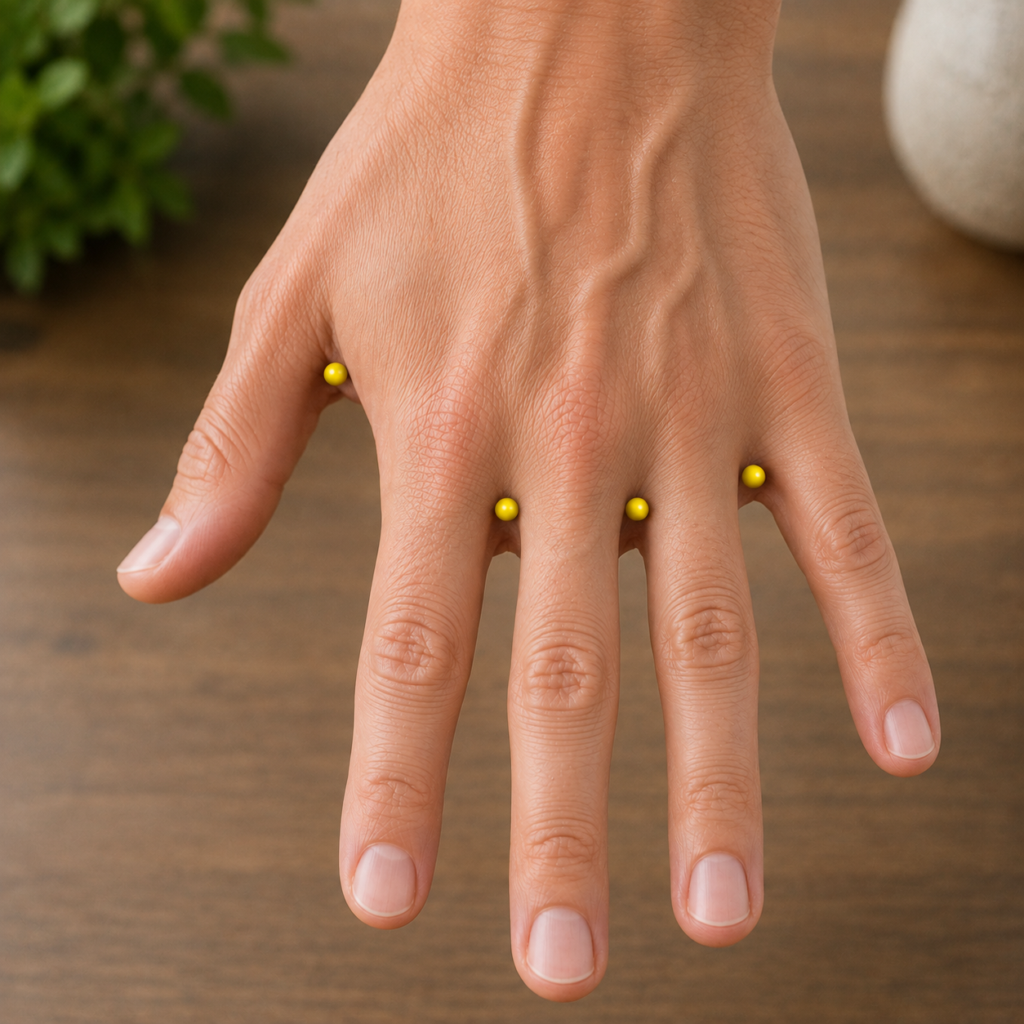
9. Press on Baxie between the fingers to ease finger pain and swelling. Baxie is a set of eight points, four on each hand, at the ends of the webs between each pair of fingers on the back of the hand. Press each point with your thumb and index finger for 20 to 30 seconds, working from the thumb to the little finger on both hands. Baxie means the “Eight Evils.”
Baxie is a group of extra points traditionally used to relieve finger pain, swelling, numbness, and stiffness. It’s especially helpful for knuckles that feel puffy and tight in the morning.
Why These Acupressure Points Work
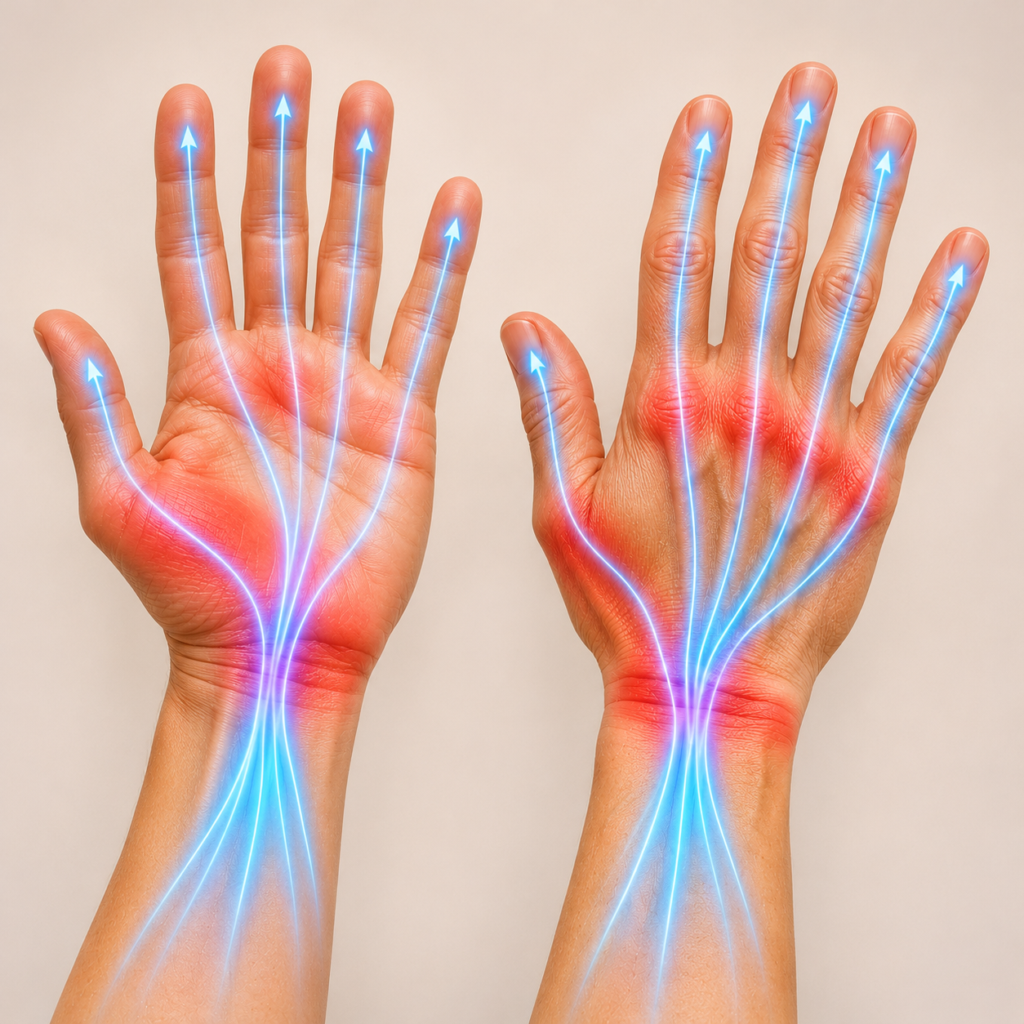
From a Traditional Chinese Medicine perspective, comfortable hands rely on Qi and Blood reaching the fingertips and on sufficient Blood to keep the tendons supple. Repetitive strain, cold, and dampness can disrupt that flow at the wrist and in the finger joints, while prolonged overwork depletes the Blood that nourishes the tendons. Points along the forearm and wrist open the channels supplying the hand, while points on the palm, knuckles, and between the fingers help move local stagnation.
The nine points work together to alleviate hand pain and stiffness:
- LI10 releases the forearm muscles that pull on the hand.
- TE4, LI5, and PC7 ease pain and stiffness around the wrist and palm.
- LI4, TE3, and SI3 move Qi and Blood through the back of the hand and fingers.
- PC8 and Baxie relax the palm and ease swollen, stiff fingers.
How to Properly Use These Acupressure Points

Acupressure for hand pain can be easily incorporated into brief breaks throughout the day, as each pressure point is accessible using the opposite hand.
- Press each of the nine points once or twice daily, holding each point for one to two minutes on both hands. Conclude by gently opening and closing both hands ten times.
- During extended periods of typing or other repetitive work, take a two-minute break each hour to apply pressure to LI10, LI4, and PC8.
- For morning finger stiffness and swelling, begin with Baxie and TE3, preferably after soaking your hands in warm water for a few minutes.
- Apply firm pressure to the forearm and palm, and gentler pressure around the wrist and finger joints. Avoid applying pressure to LI4 during pregnancy, and do not press on any joint that is red, hot, or markedly swollen.
Small daily changes can make a big difference to the strain on your hands. Take regular breaks from typing, scrolling, and gripping; use them to shake out and stretch your fingers and wrists. Set up your keyboard and mouse so your wrists stay straight and relaxed. Choose tools and kitchen utensils with thick, padded handles, and loosen your grip on your phone, pen, or steering wheel. Keep your hands warm in cold weather, and wear gloves for cold or wet work. Traditional Chinese Medicine recommends ending the day with a warm hand soak to relax the tendons and help stiff joints move.
Learn more about acupressure for Raynaud’s syndrome.
When to Get Professional Help

Seek urgent care for hand pain after an injury if there is obvious swelling or deformity, or if you can’t move a finger. Get prompt care for a cut or puncture that becomes red, hot, swollen, and painful, since hand infections can progress very rapidly. A hand or finger that turns cold, pale, or blue needs immediate attention. Call 911 for sudden weakness or numbness in one hand accompanied by facial drooping, slurred speech, or confusion (this could be a stroke), or for arm or hand pain that occurs with chest pain or shortness of breath. See a doctor if numbness, tingling, or weakness recurs; if joints are swollen and stiff for more than an hour in the morning; if a lump is growing or interfering with hand use; or if pain persists after a few weeks of rest and home care.
Acupressure is a gentle, supportive practice for hand pain. It complements, and does not replace, diagnosis and medical care.
For related health concerns, acupressure for carpal tunnel syndrome, acupressure for trigger finger, and acupressure for neuropathy in the hands are companion posts.
Above and Beyond Acupuncture offers acupuncture, cupping, and lifestyle coaching at the North Frank Lloyd Wright Boulevard location in Scottsdale.
Schedule an appointment online to start your healing journey.
The points above are only as effective as the technique used to apply them. Where to press, how firmly, and for how long all affect the result. For a full breakdown of how to perform acupressure properly at home, read Performing Acupressure in 3 Easy Steps.

About the Publisher
Paul Kerzner, L.Ac., is a licensed acupuncturist and board-certified herbalist, as well as the founder of Above and Beyond Acupuncture in Scottsdale. His own journey from chronic patient to practicing acupuncturist shapes his commitment to providing honest, clinically grounded information about acupuncture and Traditional Chinese Medicine. Learn more about Paul and his clinical approach on the About Us page.