
Key Takeaways
- Pressure points are specific areas on the body that relieve pain or calm the mind when pressed correctly.
- They are linked to both Traditional Chinese Medicine and modern understanding of the nervous system, showing diverse applications.
- Important points like LI4 for pain relief and PC6 for nausea are widely recognized and used.
- Acupressure allows individuals to apply pressure to these points for self-care, while acupuncture uses needles for deeper treatment.
- Using pressure points is generally safe, but certain precautions apply, especially during pregnancy.

Pressure points are specific spots on the body that, when pressed firmly, can relieve pain, calm the mind, soothe the stomach, or ease tension elsewhere. This idea appears in many contexts, such as massage and martial arts, but the most well-known, organized set of these points comes from Chinese medicine, where they are the same points used in acupuncture and acupressure.
This article explains what pressure points are, how they work, and identifies the most important and frequently used ones.
What Are Pressure Points?
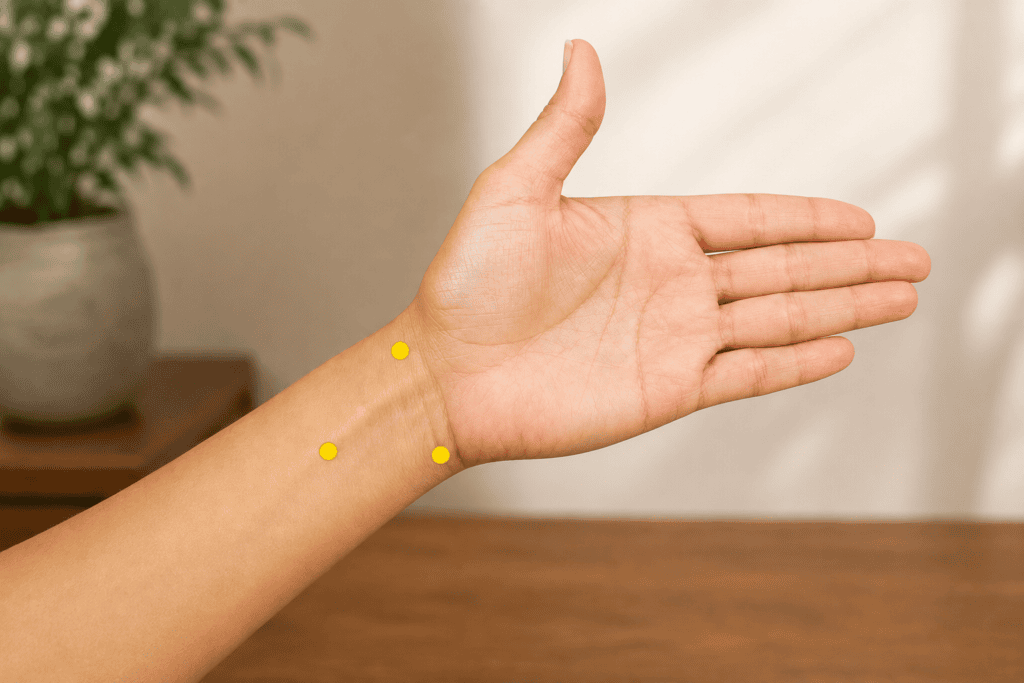
A pressure point is a specific spot on the body where applying pressure with proper technique triggers a physiological response. Some points relieve pain locally, while others have distant effects, such as easing a headache through a hand point or reducing nausea via a wrist point. In Chinese medicine, these points are known as acupoints, numbered in the hundreds across the body, each with a precise location, a name, and specific uses developed over centuries.
They are the same points targeted by acupuncturists with needles and by others through acupressure using the fingers or thumbs; the only difference is the tool used, a fine needle versus fingers or thumbs.
Pressure Points Across Different Traditions
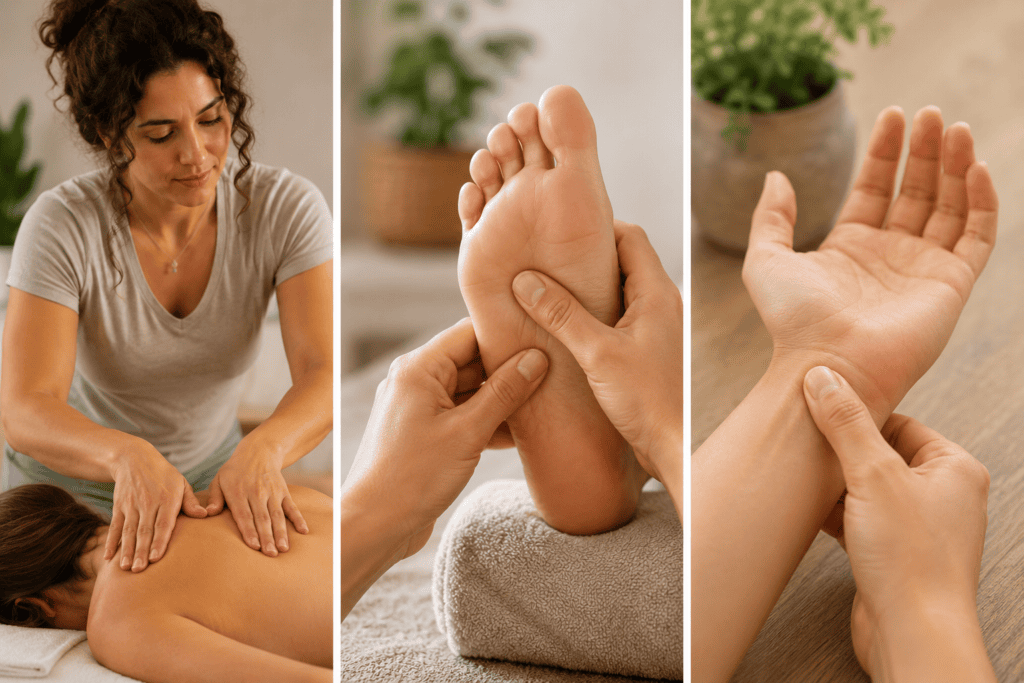
The phrase “pressure points” gets used in a few different worlds, which is part of why it can be confusing. In massage and bodywork, it often refers to tender, tight knots in the muscles, sometimes called trigger points, that therapists press to release tension. In reflexology, it refers to points on the feet and hands said to correspond to organs and regions of the body. In martial arts, it refers to vulnerable spots where pressure or a strike can cause pain or disrupt an opponent. These uses overlap here and there, but the detailed, systematic map of pressure points, the one with named points, defined locations, and specific uses for health, comes from Traditional Chinese Medicine and its thousands of years of development. This piece focuses on that system, which forms the basis of acupressure and acupuncture.
How Do Pressure Points Work?
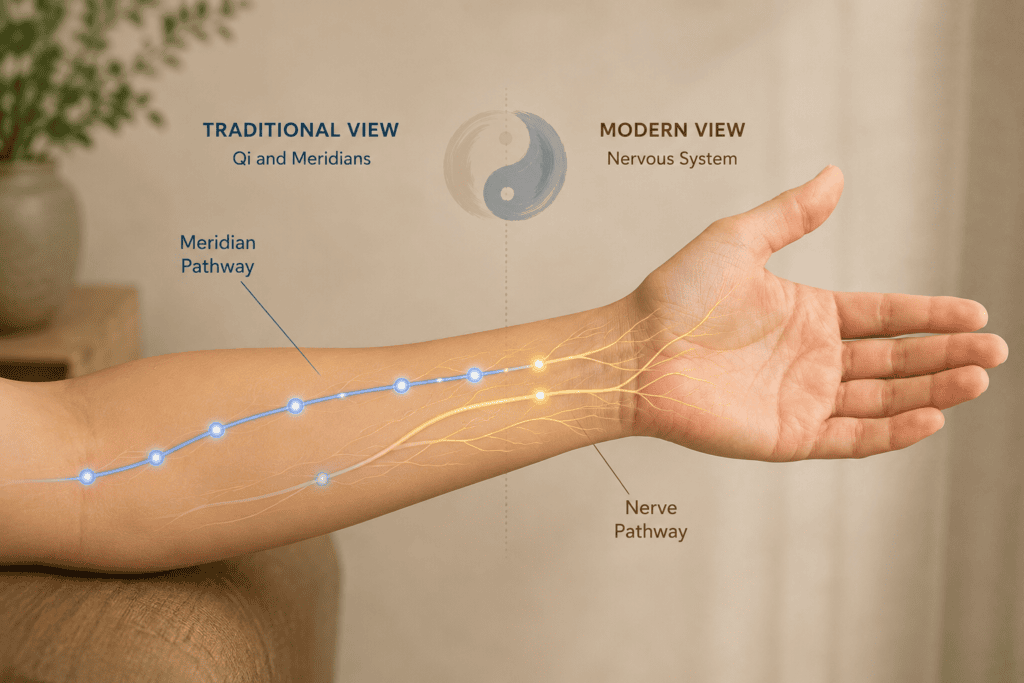
There are two common methods for understanding how pressure points function, and it’s useful to learn both.
In traditional Chinese medicine, the body is powered by Qi, a vital energy circulating through meridians. Good health depends on this flow being smooth and balanced; disruptions, such as blockages, deficiencies, or excesses, cause pain and illness. Pressure points are locations where Qi comes close to the surface, allowing them to be accessed and influenced. By applying pressure, one can regulate the flow, remove blockages, and restore balance. This explains why stimulation of a point far from a symptom can still have an effect, as both are connected along the same channel.
The modern perspective views the same points through the lens of the nervous system. Many acupressure points are located over nerve-rich areas or near nerves, blood vessels, and connective tissue bands. Applying pressure to these sites can stimulate the nervous system in measurable ways, triggering the release of natural painkillers like endorphins, reducing pain signals to the brain, and shifting the autonomic nervous system from stress-related fight-or-flight to a calmer rest-and-digest state. This shift largely explains why acupressure promotes relaxation. Some pressure points also correspond to trigger points, which are muscular knots targeted in bodywork. As research progresses to reveal the complete picture, existing studies confirm specific points like the wrist point PC6 for nausea.
The two perspectives are less conflicting and more like two languages representing the same map: one evolved through centuries of detailed observation, and the other constructed from modern anatomical knowledge.
The Meridian System and How Points Are Named
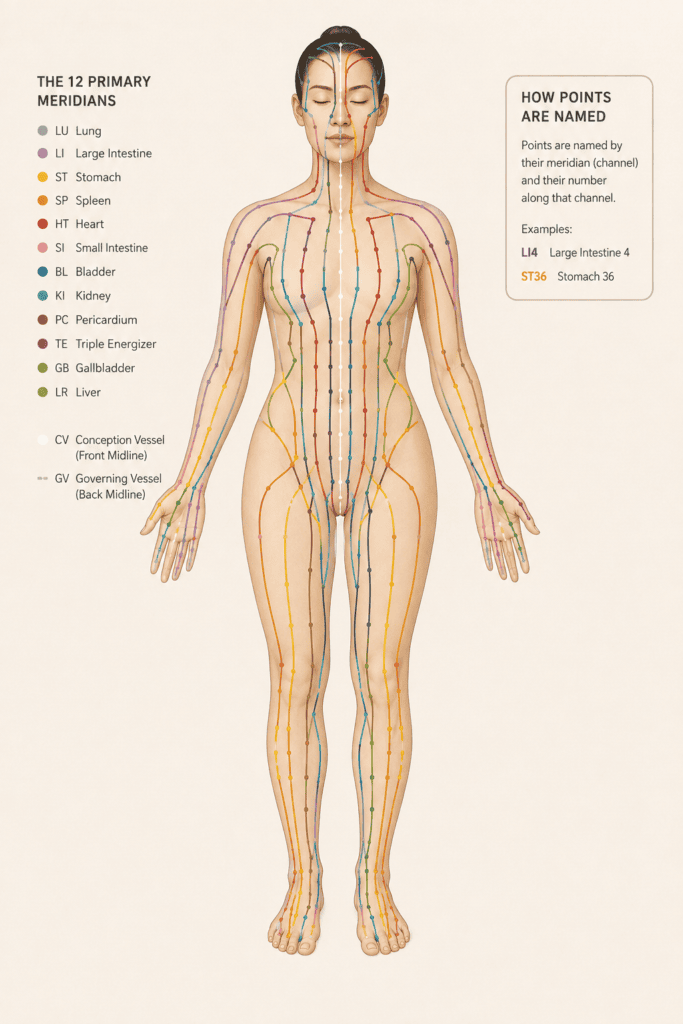
Meridians are channels along which the points are located. Twelve main meridians link to an organ system: Lung, Large Intestine, Stomach, Spleen, Heart, Small Intestine, Bladder, Kidney, Pericardium, Triple Burner, Gallbladder, and Liver. Additionally, two central vessels, the Conception Vessel in the front and the Governing Vessel at the back, are used regularly. Each meridian follows a specific route on the body and includes the points assigned to it.
Most points are labeled with a channel abbreviation followed by a number indicating their position along that channel. For example, LI4 is the fourth point on the Large Intestine channel, ST36 is the thirty-sixth on the Stomach channel, and PC6 is the sixth on the Pericardium channel. A smaller group of important points, called extra points, are located outside the main channels, such as Yintang between the eyebrows, and there’s a separate map for ear points. Once you grasp the naming system, finding any point becomes simple and easy to remember.
Important Pressure Points to Know
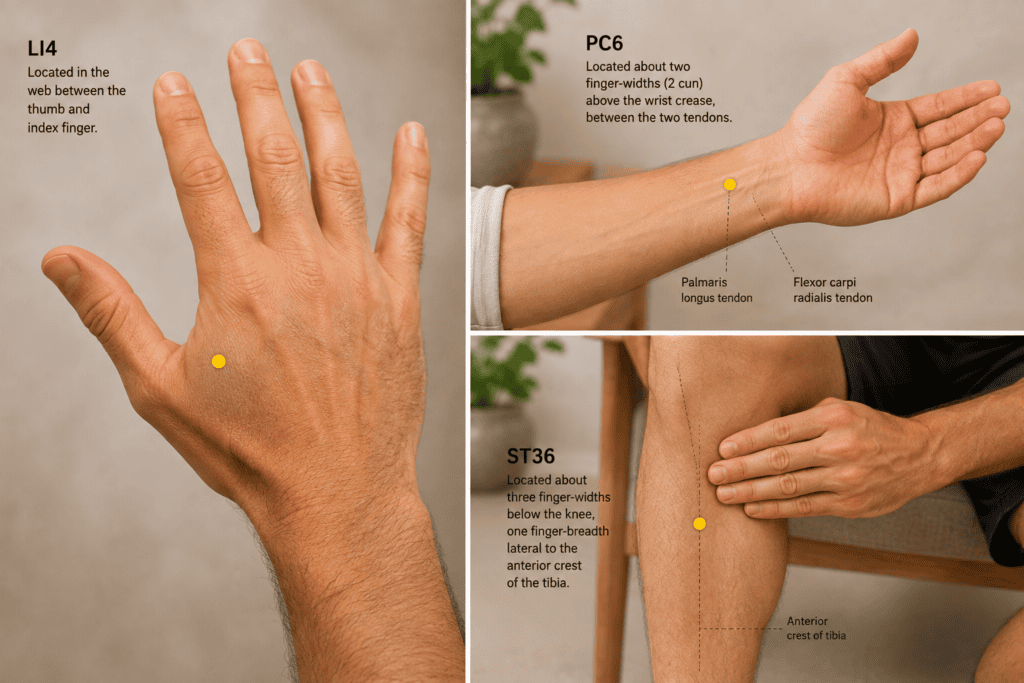
A few key points often come up because they are useful and reliable. Here are some of the most important ones to understand:
- LI4: in the webbing between the thumb and index finger, is one of the great pain-relieving points in the body and is used for headaches, facial and dental pain, and pain in general.
- PC6: three finger-widths above the inner wrist crease, is the go-to point for nausea, motion sickness, and an unsettled stomach, and it calms anxiety as well.
- ST36: below the knee, is the premier point for building energy, strengthening digestion, and supporting overall resilience.
- LR3:, on the top of the foot, moves stuck energy and is central to easing stress, tension, and irritability.
- GB20: at the base of the skull, relieves neck tension and is a common remedy for tension headaches.
- Yintang: between the eyebrows, is one of the most calming points there is, used to quiet a racing mind and settle the nerves.
Most of these points often appear together across various conditions, as a good point usually serves multiple purposes at once.
What Are Pressure Points Used For?
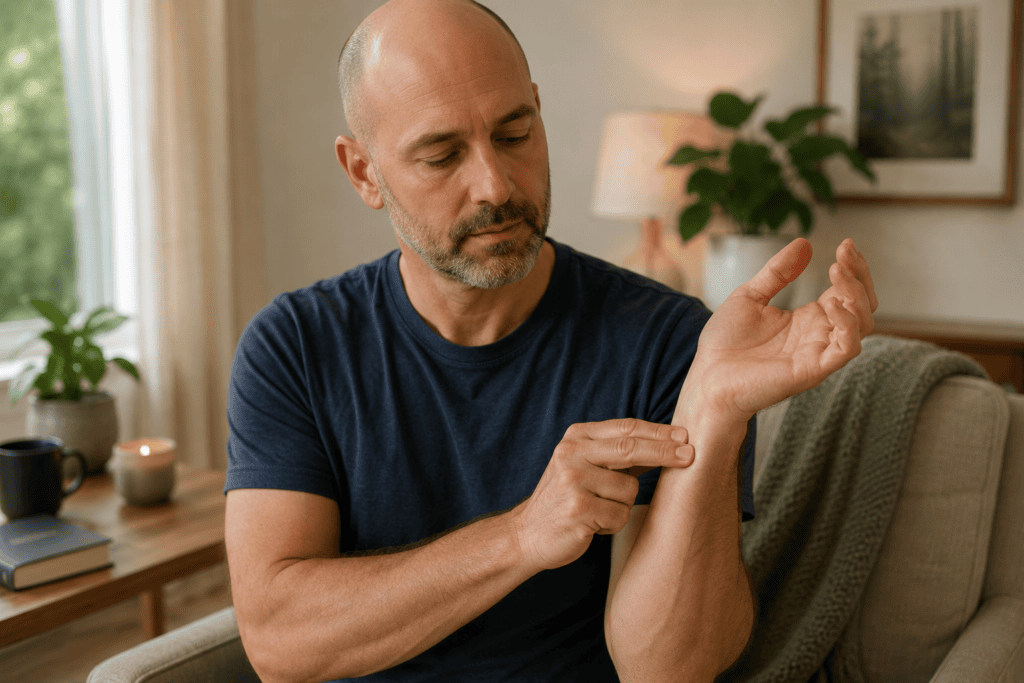
Pressure points are popular because they’re easy to use; you can activate them yourself at no cost, using only your hands. Acupressure involves gently pressing these points to relieve common everyday problems, and there are many points to discover and use.
People use pressure points for pain like headaches and muscle tension, for nausea and morning sickness, for stress and anxiety including situational nerves like the fear of public speaking and everyday frustration, for trouble sleeping, for indigestion and other digestive upset, and for supporting the body in run-down states like a weakened immune system.
For a better understanding of what the practice of acupressure entails please read: What Is Acupressure Used For?
“Does Acupressure Really Work?” offers a thorough answer to an important question for those seeking to better understand the practice.
What is the Difference Between Acupressure and Acupuncture?
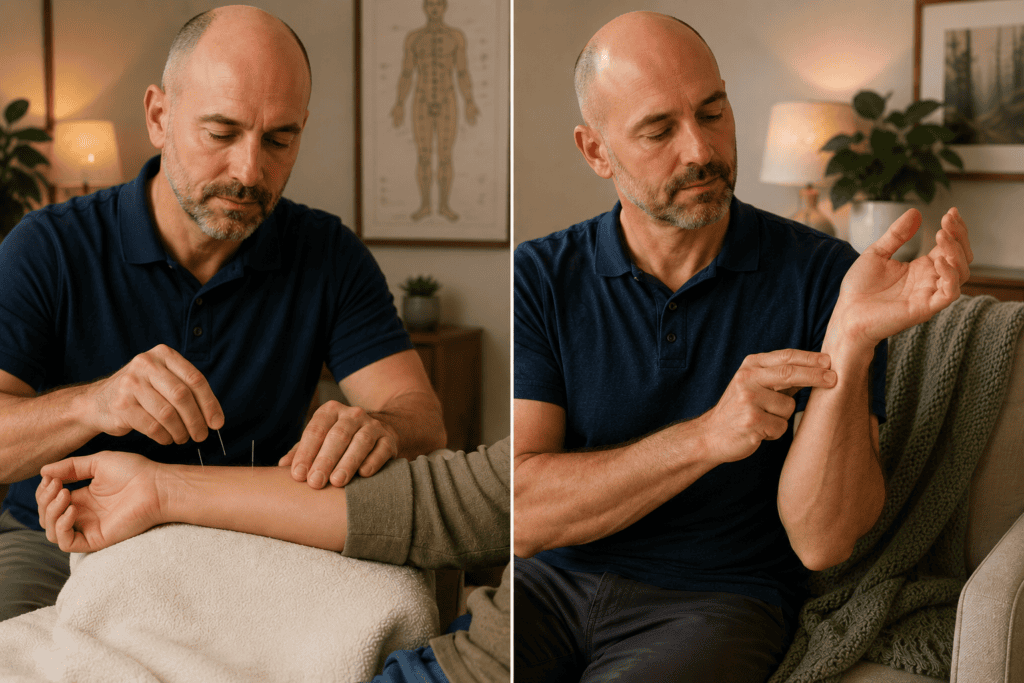
Since this question comes up often, it’s worth clarifying that acupressure and acupuncture use the same points and meridian system.
Acupuncture involves a licensed acupuncturist inserting fine needles in a clinical setting to target specific acupuncture points and achieve effects that finger pressure alone can’t.
Acupressure relies on fingers or thumbs to activate those points, making it an accessible technique anyone can do at home for self-care. Essentially, acupressure is a handy, DIY alternative to acupuncture, great for everyday discomfort and quick relief, while acupuncture provides more in-depth, clinical treatment.
How Can I Start Safely Using Pressure Points?
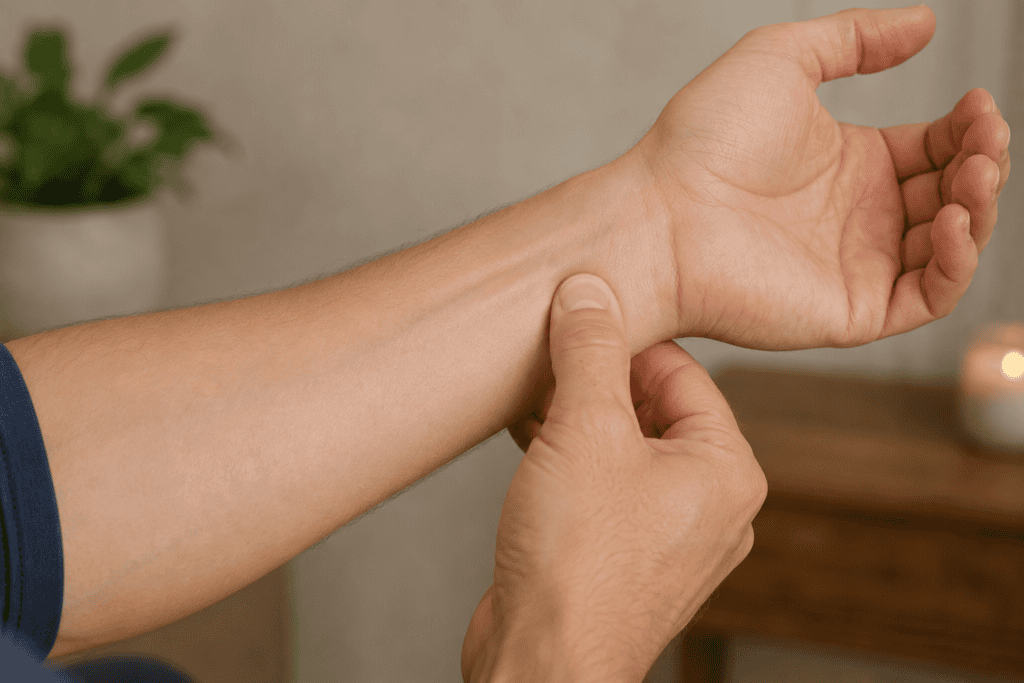
Using pressure points is rather straightforward and carries minimal risk, which makes them appealing.
To use them, identify the point accurately, then press firmly and steadily with a thumb or fingertip, holding for one to two minutes while breathing slowly. Repeat on both sides of the body where the point is located. The pressure should create a dull ache without sharp pain. You can apply pressure several times daily. For detailed instructions, ‘Performing Acupressure in 3 Easy Steps‘ provides a clear guide on how to perform it.
A few sensible cautions apply. Certain points, including LI4 and SP6, are traditionally avoided during pregnancy, so anyone who is pregnant should check before using them. Pressure points are for everyday complaints and general support, not a replacement for medical care, and a physician should evaluate any serious, severe, or persistent symptom rather than managing it with acupressure alone. Used within those limits, pressure points are a genuinely useful thing to have at your fingertips.
Above and Beyond Acupuncture offers acupuncture, cupping, and lifestyle coaching at the North Frank Lloyd Wright Boulevard location in Scottsdale.
Schedule an appointment online or call us today to start your healing journey.
About the Publisher
Paul Kerzner, L.Ac., is a licensed acupuncturist and board-certified herbalist, as well as the founder of Above and Beyond Acupuncture in Scottsdale. His own journey from chronic patient to practicing acupuncturist shapes his commitment to providing honest, clinically grounded information about acupuncture and Traditional Chinese Medicine. Learn more about Paul and his clinical approach on the About Us page.