Key Takeaways
- A cold is a viral infection of the nose and throat. Children typically experience six to twelve colds per year, with most lasting approximately one week.
- Infants primarily breathe through their noses; therefore, nasal congestion may make feeding and sleeping difficult. Saline drops, followed by gentle suction, can help clear the nasal passages.
- Honey should not be given to children under 12 months of age, and cough and cold medications should not be administered to children under six years of age.
- In Traditional Chinese Medicine, a cold is understood as Wind entering through the nose and skin, while an infant’s delicate Lung is considered particularly susceptible to obstruction by Wind-Cold or Wind-Heat.
- Nine gentle acupressure points on the face, arms, hands, upper back, and legs may help relieve nasal congestion and soothe a baby during a cold.

A cold often begins with a sneeze, followed by a runny nose. By the next morning, a baby may be congested during feedings, frequently pausing at the breast or bottle to breathe. Naps may be brief, nights may feel long, and the nose can become congested again soon after it has been cleared. Colds are among the most common illnesses in infancy, and a few gentle measures to help a baby breathe and rest more comfortably can make the days more manageable.
According to AboutKidsHealth, the family health site of The Hospital for Sick Children, a cold is a viral infection of the nose and throat, and children are likely to get six to 12 colds a year. Symptoms include a runny or stuffy nose, sneezing, cough, fever, sore throat, and red eyes. Most colds last about a week; a cough may linger for up to three weeks, while fever usually begins at the start and lasts three to five days. AboutKidsHealth recommends using saline drops in each nostril several times a day, especially before feedings and sleep, then gently suctioning with a soft bulb or nasal aspirator. It also recommends plenty of fluids and a cool-mist humidifier in the bedroom. Do not give honey to babies under 12 months or cough and cold medicines to children under six.
Young babies breathe mainly through their noses, and their nasal passages are narrow, so even a small amount of mucus can make a noticeable difference. A stuffy nose can make it difficult to suck and breathe at the same time, so babies with colds often feed in short bursts and wake more often at night. Frequent colds during the first few years are normal because babies’ immune systems encounter many common viruses for the first time.
Traditional Chinese Medicine views a cold as Wind entering the body through the nose and skin. The Lung governs the body’s surface and opens into the nose; in babies, it is considered especially delicate and easily blocked. Clear, runny mucus, sneezing, and a pale face are associated with Wind-Cold, while thick yellow mucus, a red face, and fussiness are associated with Wind-Heat. Gentle points that open the nose, release Wind from the body’s surface, and strengthen the body can help ease congestion and support a baby through a cold.
The points below start on the face, move to the arms and hands, continue to the upper back, and finish on the legs. For a baby, measure all distances using the baby’s own finger-widths, not an adult’s.
What Acupressure Points to Press and Why
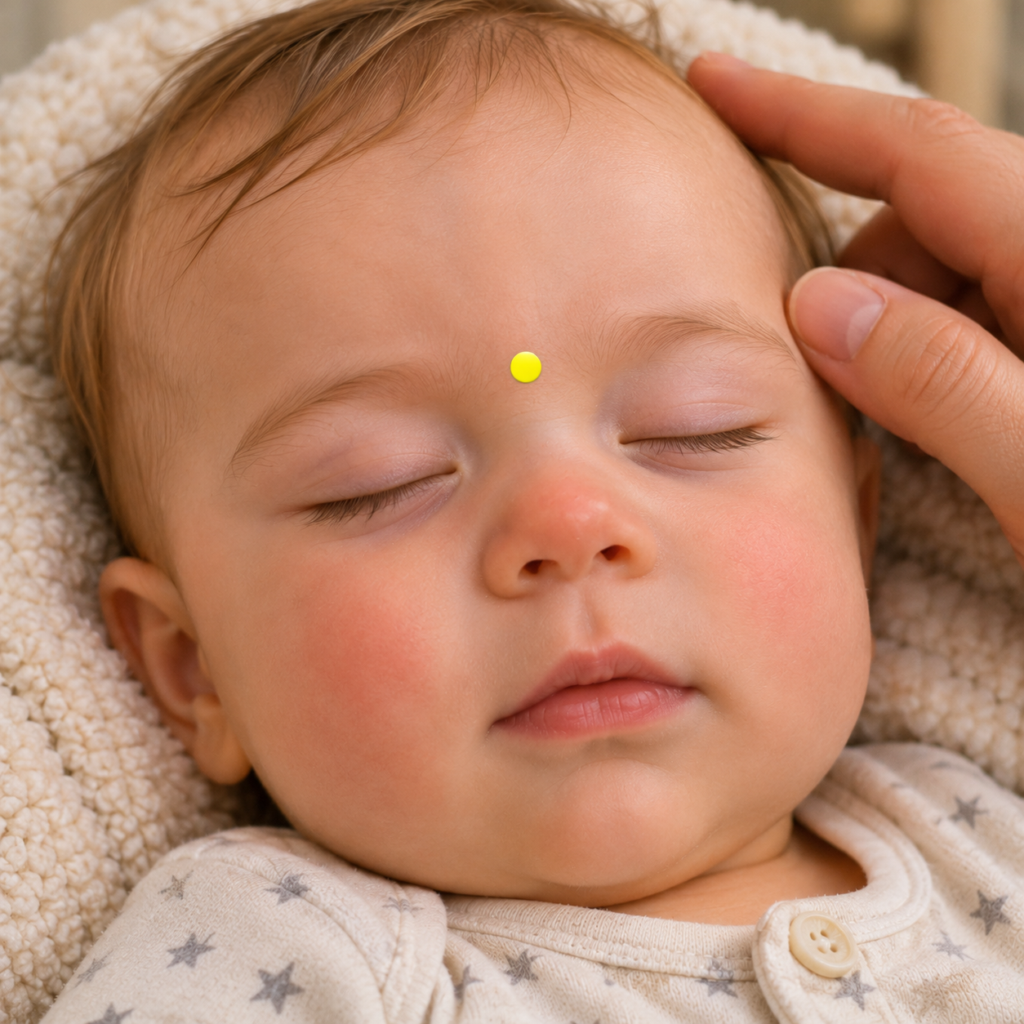
1. Stroke Yintang between the eyebrows to ease congestion. Yintang sits at the midpoint between the baby’s eyebrows. With the pad of your thumb, stroke gently upward from Yintang toward the hairline, alternating thumbs, for 30 seconds to one minute. Yintang means the “Hall of Impression.”
Yintang is an extra point traditionally used to open the nose and calm the mind. Slow upward strokes may ease stuffiness and soothe a fussy baby.
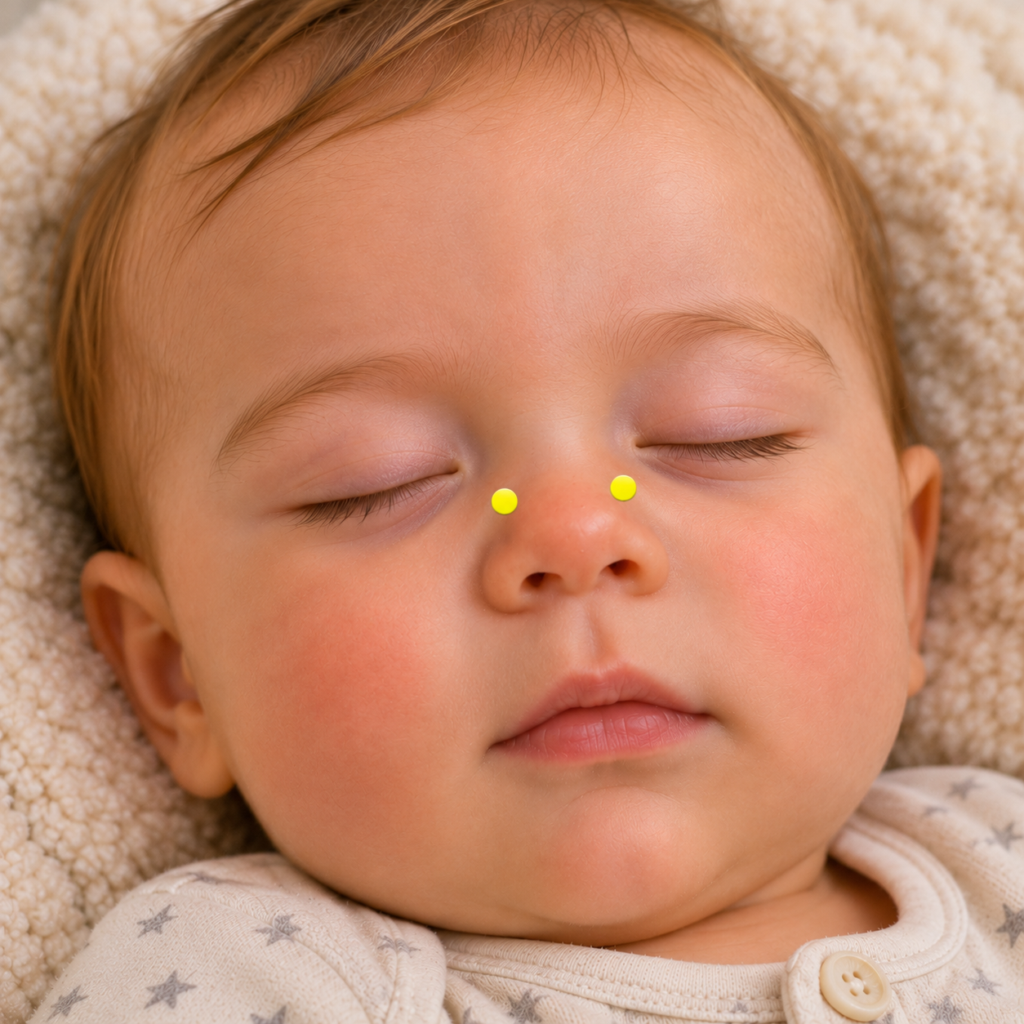
2. Press Bitong on the sides of the nose to open the nasal passages. Bitong sits on both sides of the nose, at the top of the soft groove where the bony bridge of the nose meets the softer cartilage below. Rest your fingertips lightly on both points at the same time, or make tiny circles, for 30 seconds. Bitong means “Penetrating the Nose.”
Bitong is an extra point traditionally used to relieve nasal congestion, sneezing, and a runny nose.
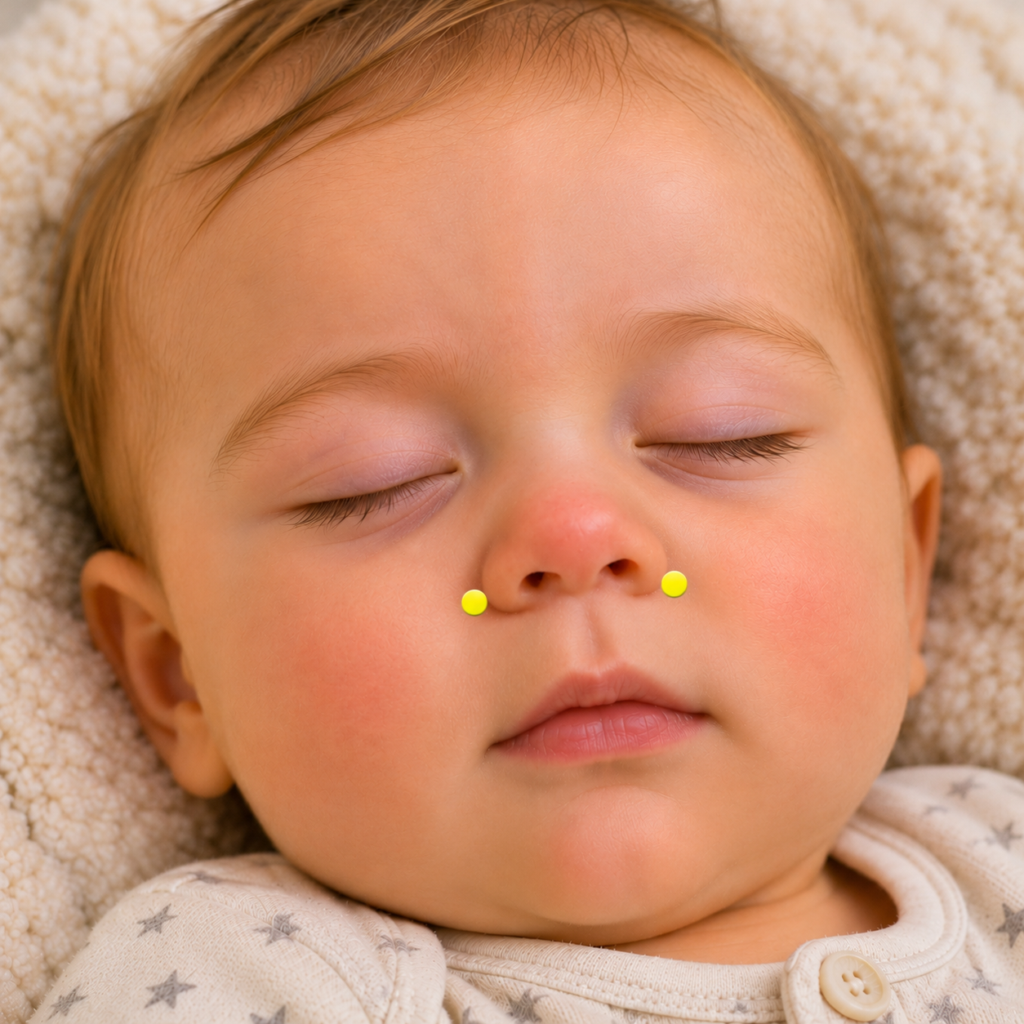
3. Press LI20 beside the nostrils to clear the nose. LI20 sits on both sides of the nose, in the small groove just beside the widest part of each nostril. Rest your fingertips lightly on both points at the same time, or make tiny circles, for 30 seconds. LI20 is called “Yingxiang,” the “Welcome Fragrance.”
LI20 is the meeting point of the Large Intestine and Stomach channels and one of the most important points in Traditional Chinese Medicine for a stuffy or runny nose.
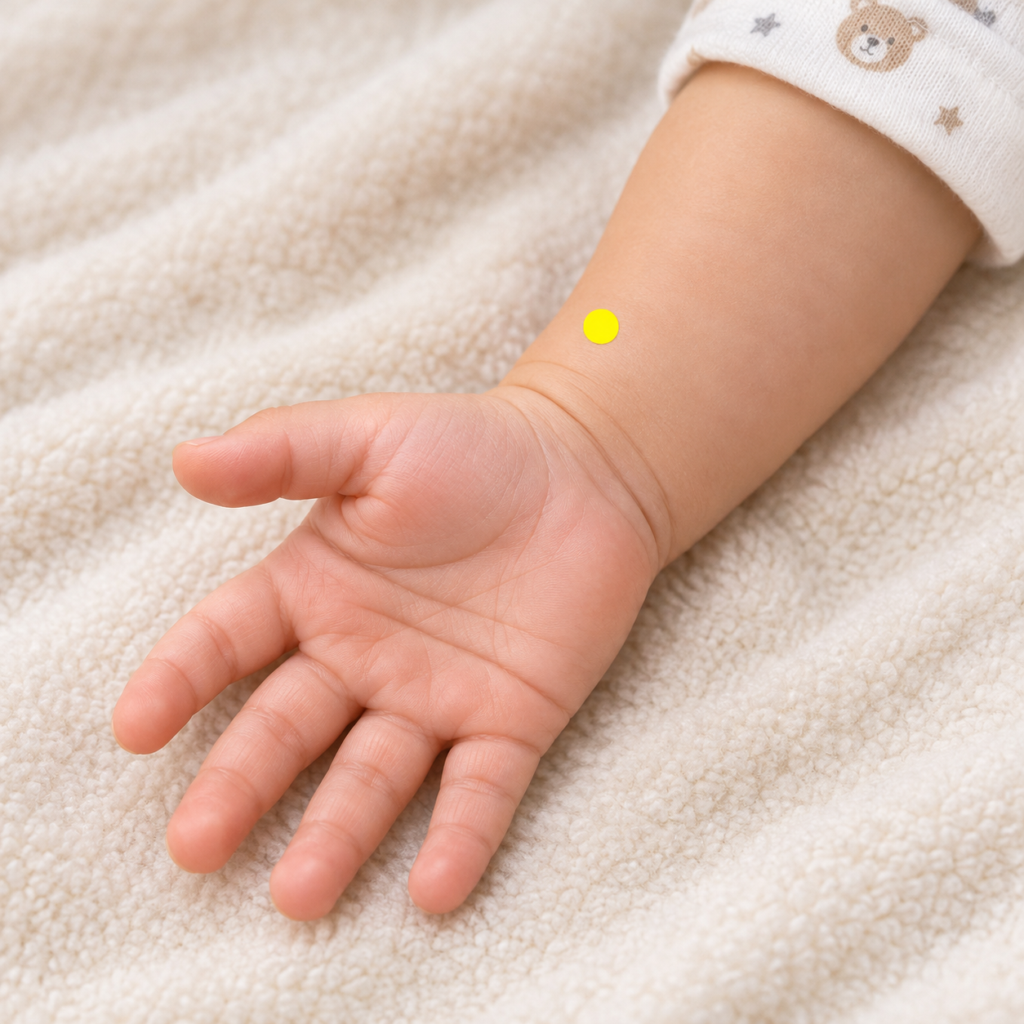
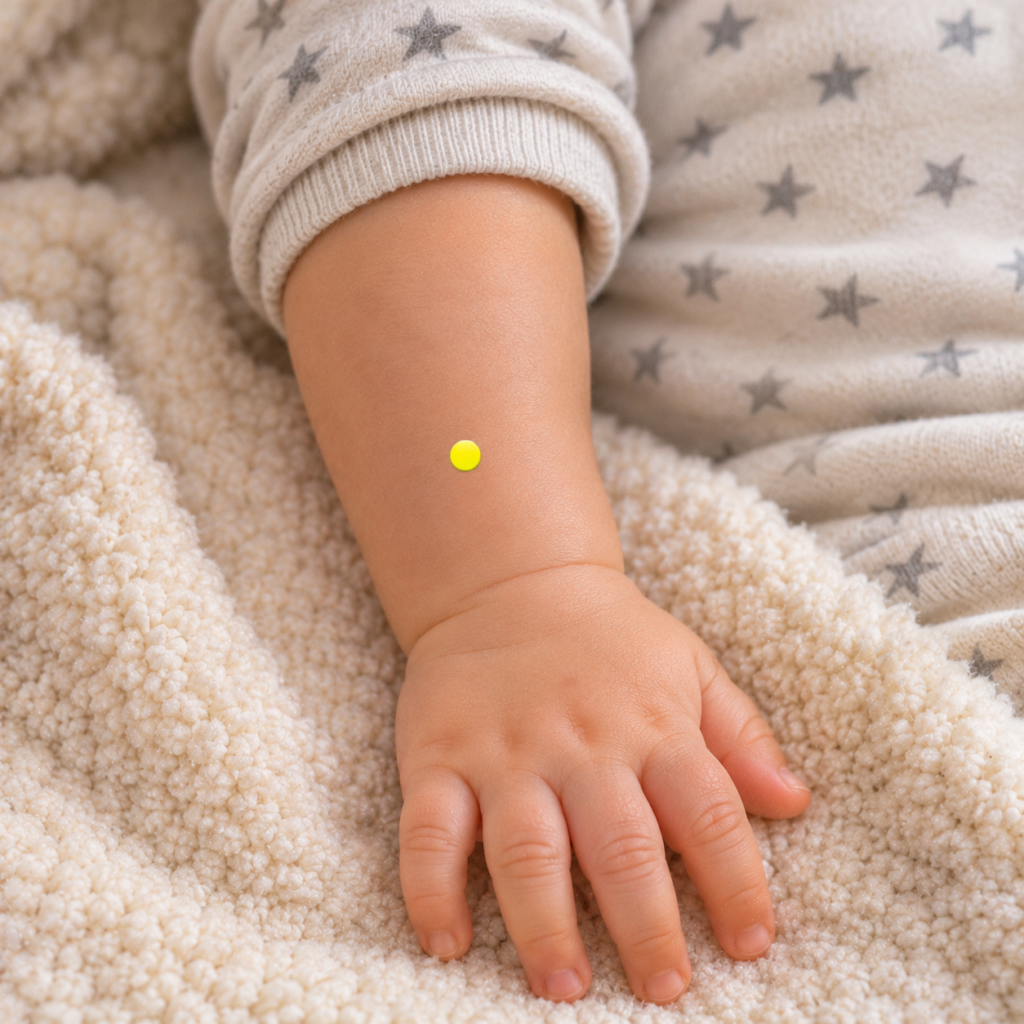
4. Press LU7 above the wrist to open the Lung. LU7 sits on the thumb side of the forearm, about one and a half of the baby’s finger-widths above the wrist crease, just above the small bony bump on the thumb side of the wrist. Make tiny, light circles with your fingertip for 30 seconds on each arm. LU7 is called “Lieque,” the “Broken Sequence.”
LU7 is the connecting point of the Lung. It opens the Lung, releases Wind, and is traditionally used for a stuffy nose and cough at the start of a cold.
5. Press TE5 on the back of the forearm to release Wind. TE5 sits on the back of the forearm, about two of the baby’s finger-widths above the wrist crease, in the middle between the two bones of the forearm. Make tiny, light circles with your fingertip for 30 seconds on each arm. TE5 is called “Waiguan,” the “Outer Gate.”
TE5 is the connecting point of the Triple Burner. It releases Wind from the surface and is traditionally used at the first signs of a cold.
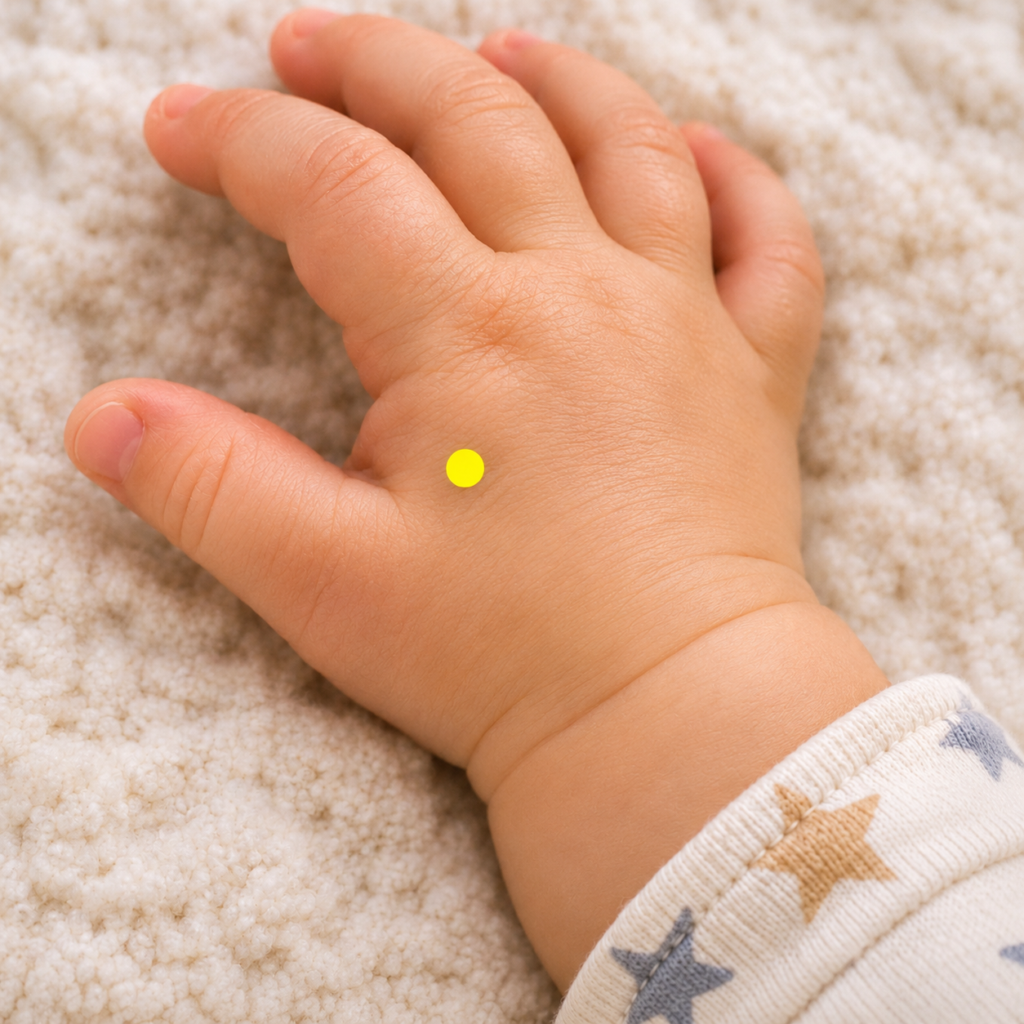
6. Press LI4 on the back of the hand to clear the head. LI4 sits on the back of the hand, in the fleshy web between the thumb and index finger. Hold the baby’s hand and make tiny, light circles on the point for 30 seconds on each hand. LI4 is called “Hegu,” the “Joining Valley.”
LI4 is the source point of the Large Intestine. It releases Wind and pairs with LI20 to clear congestion from the nose and face.
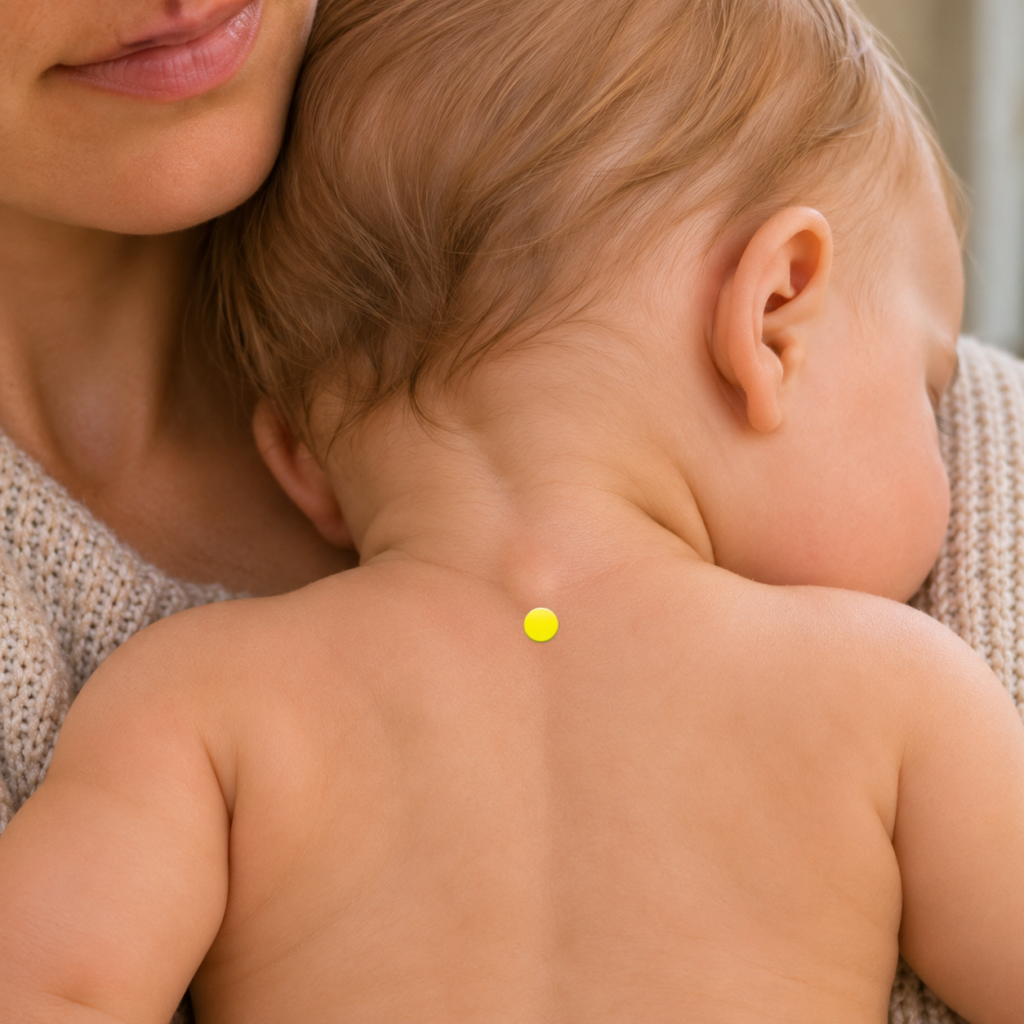
7. Rub GV14 at the base of the neck to release the surface. GV14 sits on the midline of the upper back, just below the large bump at the base of the neck that stands out when the head bends forward. With the baby held upright against your shoulder, make slow, light circles with one fingertip for 30 seconds. GV14 is called “Dazhui,” the “Great Vertebra.”
GV14 is the meeting point of the Governing Vessel and all the Yang channels. It releases Wind from the surface and is traditionally used for colds with chills or a mild fever.
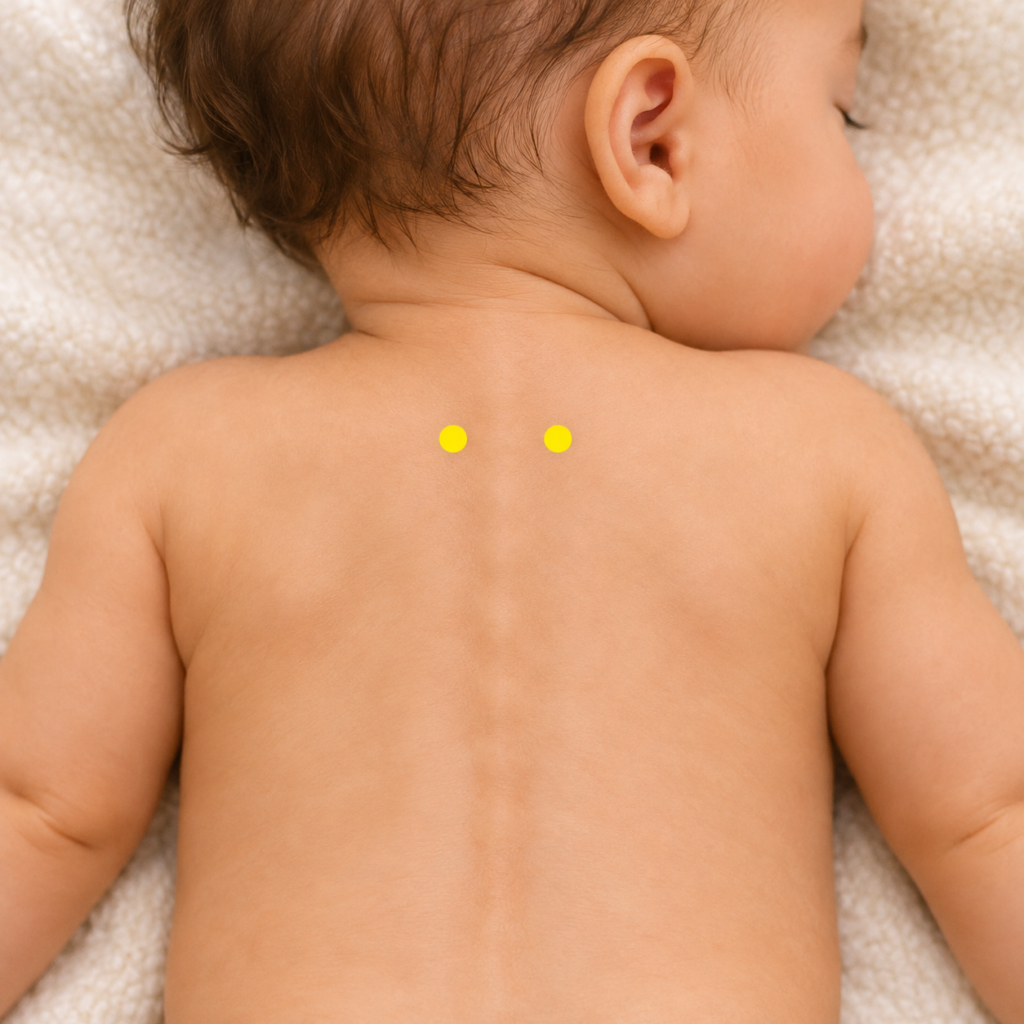
8. Rub BL12 on the upper back to clear Wind. BL12 sits on the upper back, on both sides of the spine, about one of the baby’s finger-widths out from the spine, level with the space just below the second bump of the spine below the base of the neck. With the baby held upright against your shoulder, make slow, light circles on both sides with your fingertips for 30 seconds. BL12 is called “Fengmen,” the “Wind Gate.”
BL12 is a point on the Bladder channel traditionally used to release Wind at the onset of a cold, when sneezing and runny nose first appear.
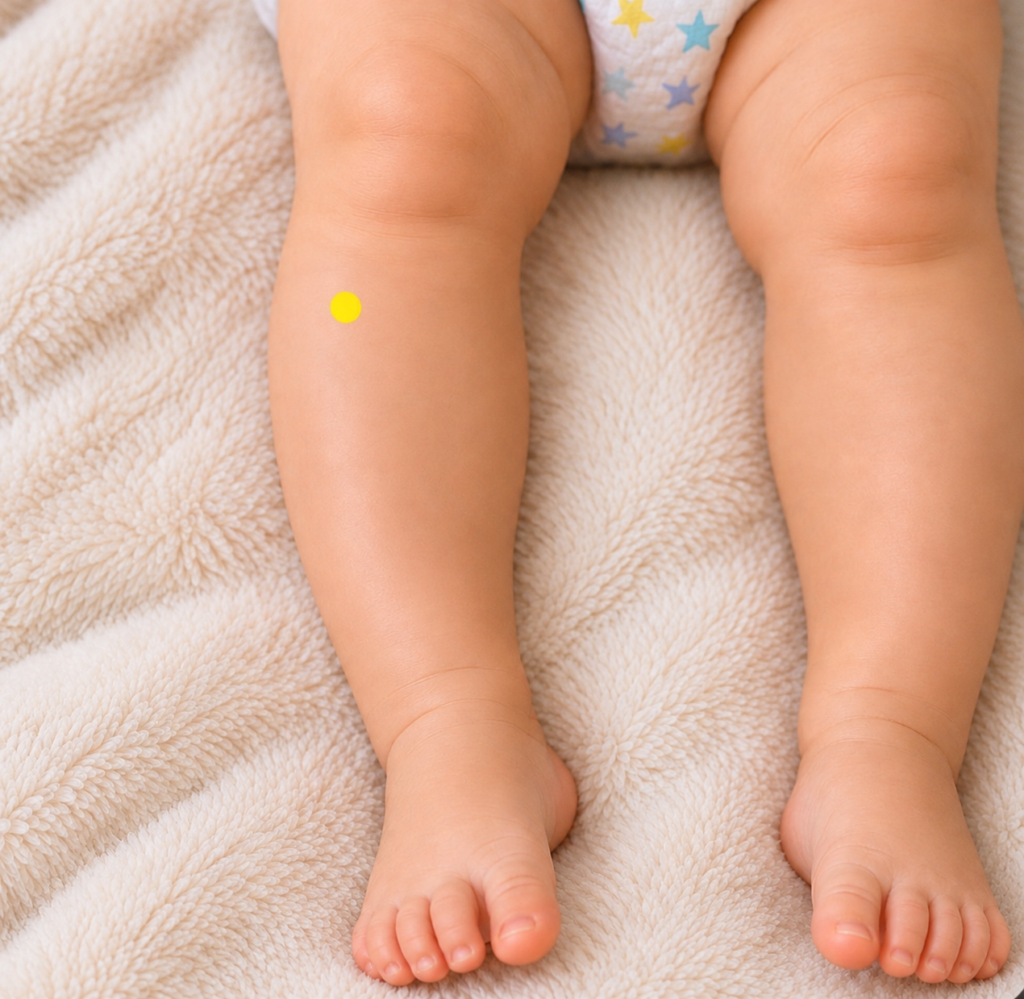
9. Press ST36 below the knee to strengthen the body. ST36 sits on the front of the lower leg, about four of the baby’s finger-widths below the bottom of the kneecap and one of the baby’s finger-widths out from the edge of the shinbone. Make tiny, light circles with your fingertip for 30 seconds on each leg. ST36 is called “Zusanli,” the “Leg Three Miles.”
ST36 is the sea point of the Stomach. It strengthens the Spleen and Stomach and supports a baby’s overall strength and appetite during a cold.
Why These Acupressure Points Work

From the perspective of Traditional Chinese Medicine, a baby’s cold is attributed to Wind entering through the nose and skin and obstructing the delicate Lung. Points on the face open the nose directly; points on the arms and hands support the Lung and dispel Wind; points on the upper back clear Wind from the body’s surface; and a point on the leg strengthens the body during recovery.
The nine acupressure points help to alleviate a baby’s cold symptoms:
- Yintang, Bitong, and LI20 open the nose and ease congestion.
- LU7, TE5, and LI4 open the Lung and release Wind.
- GV14 and BL12 clear Wind from the surface.
- ST36 strengthens the body during recovery.
How to Properly Use These Acupressure Points
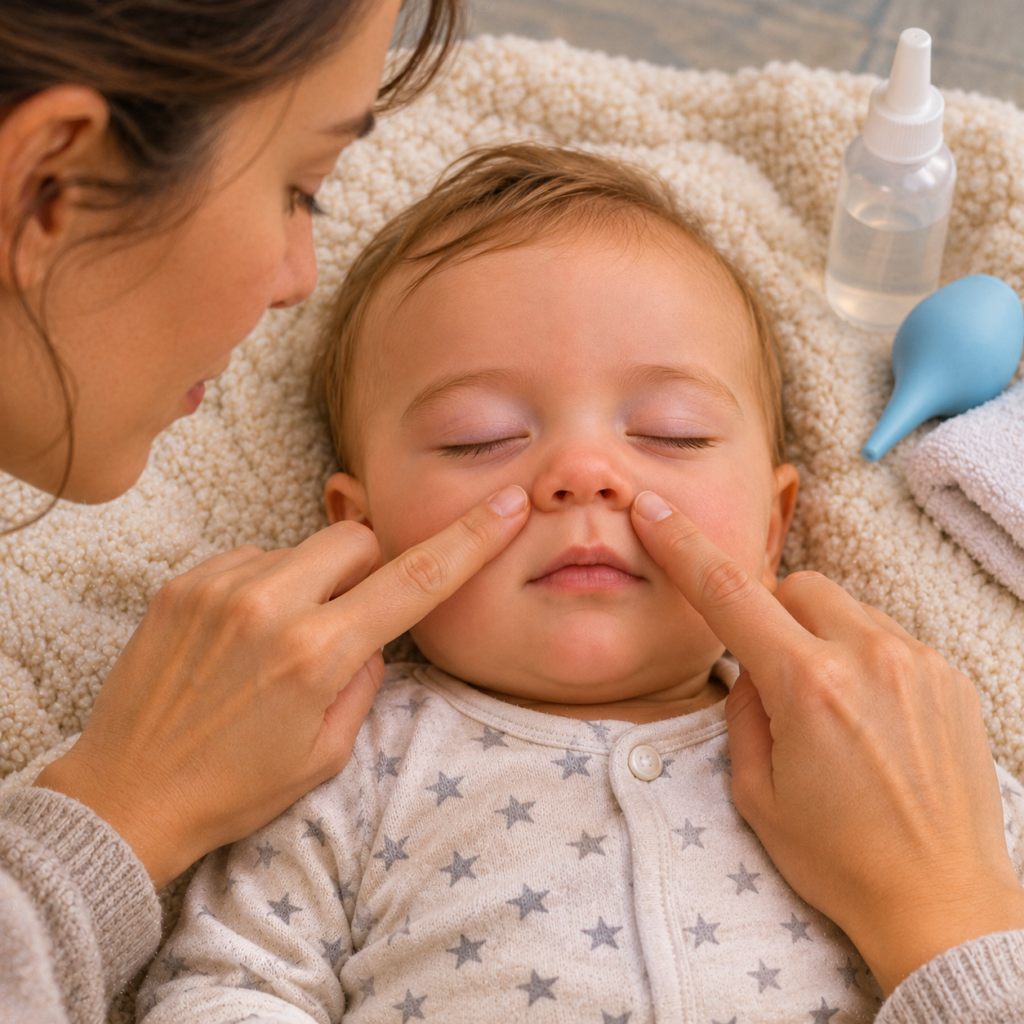
Acupressure for a baby’s cold works best after clearing the nose with saline and gentle suction, when the baby is calm, such as before a feeding, during a cuddle, or as part of the bedtime routine.
- With the baby lying on their back, begin by applying upward strokes to Yintang, followed by gentle pressure on Bitong and LI20 on both sides of the nose.
- Continue applying small circular motions to LU7, TE5, and LI4 on both arms.
- Hold the baby upright against your shoulder and gently make slow circular motions over GV14 and the BL12 points on both sides of the spine.
- Conclude by applying gentle circular motions to ST36 on both legs.
- Use only light, slow fingertip pressure, much lighter than you would use on an adult. Stop if the baby fusses or seems uncomfortable. Never press inside the nose, on the front of the throat, or on the soft spots on top of the head. Do not use these points on broken, irritated, or chapped skin around the nose.
Simple home care can help ease symptoms. AboutKidsHealth recommends administering two to three saline drops in each nostril several times daily, particularly before feedings and sleep, followed by gentle suction using a soft rubber bulb or nasal aspirator. Ensure the baby receives plenty of fluids, and use a cool-mist humidifier in the bedroom. Because babies need to breathe through their noses to feed effectively, clearing the nose before feedings can be especially helpful. Do not give honey to children under 12 months of age or cough and cold medicines to children under six. Consult the pediatrician before administering any fever-reducing medicine. Always place babies on their backs to sleep, without pillows or wedges, including during a cold. Traditional Chinese Medicine also recommends keeping the baby’s neck and upper back warm and covered, avoiding drafts, and ensuring adequate rest.
Learn more about whether acupressure is safe for kids.
When to Get Professional Help

Call 911 if a baby has difficulty breathing, bluish lips, or is unusually sleepy and difficult to wake. Take the baby to the emergency department if they are highly irritable, have a stiff or painful neck, or appear dehydrated and are not producing wet diapers. Contact the pediatrician if a baby under three months of age develops a cold; if a baby is unable to drink enough because of nasal congestion; if a fever begins several days after the cold starts or lasts more than five days; or if the baby has yellow eye discharge, ear pain or drainage, or a very sore throat. Any baby under three months of age with a temperature of 100.4°F or higher requires immediate medical attention. Acupressure is a gentle, supportive practice for a baby with a cold. It complements, and does not replace, diagnosis and medical care.
For related health concerns, acupressure for baby cough, acupressure for the common cold, and acupuncture for kids are companion posts.
Above and Beyond Acupuncture offers acupuncture, cupping, and lifestyle coaching at the North Frank Lloyd Wright Boulevard location in Scottsdale.
Schedule an appointment online to start your healing journey.
The points above are only as effective as the technique used to apply them. Where to press, how firmly, and for how long all affect the result. For a full breakdown of how to perform acupressure properly at home, read Performing Acupressure in 3 Easy Steps.

About the Publisher
Paul Kerzner, L.Ac., is a licensed acupuncturist and board-certified herbalist, as well as the founder of Above and Beyond Acupuncture in Scottsdale. His own journey from chronic patient to practicing acupuncturist shapes his commitment to providing honest, clinically grounded information about acupuncture and Traditional Chinese Medicine. Learn more about Paul and his clinical approach on the About Us page.