Key Takeaways
- Pickleball elbow is an overuse injury affecting the tendons on the outer side of the elbow, the same condition as tennis elbow, and it ranks among the most common pickleball injuries.
- The tendons that straighten the wrist and fingers all attach to a single small bony point on the outer elbow, and wrist snapping, gripping, and arm-only swings overload that spot.
- In Traditional Chinese Medicine, repetitive strain leaves Qi and Blood stagnant in the Large Intestine and San Jiao channels that run along the outer forearm and elbow.
- Nine acupressure points on the elbow, forearm, hand, and leg help ease pain in the outer elbow, relax overworked forearm muscles, and support the tendons as they heal.
- Acupressure supports recovery but does not replace rest and proper technique. Numbness in the fingers, a swollen or deformed elbow, or pain that keeps getting worse needs a medical evaluation.
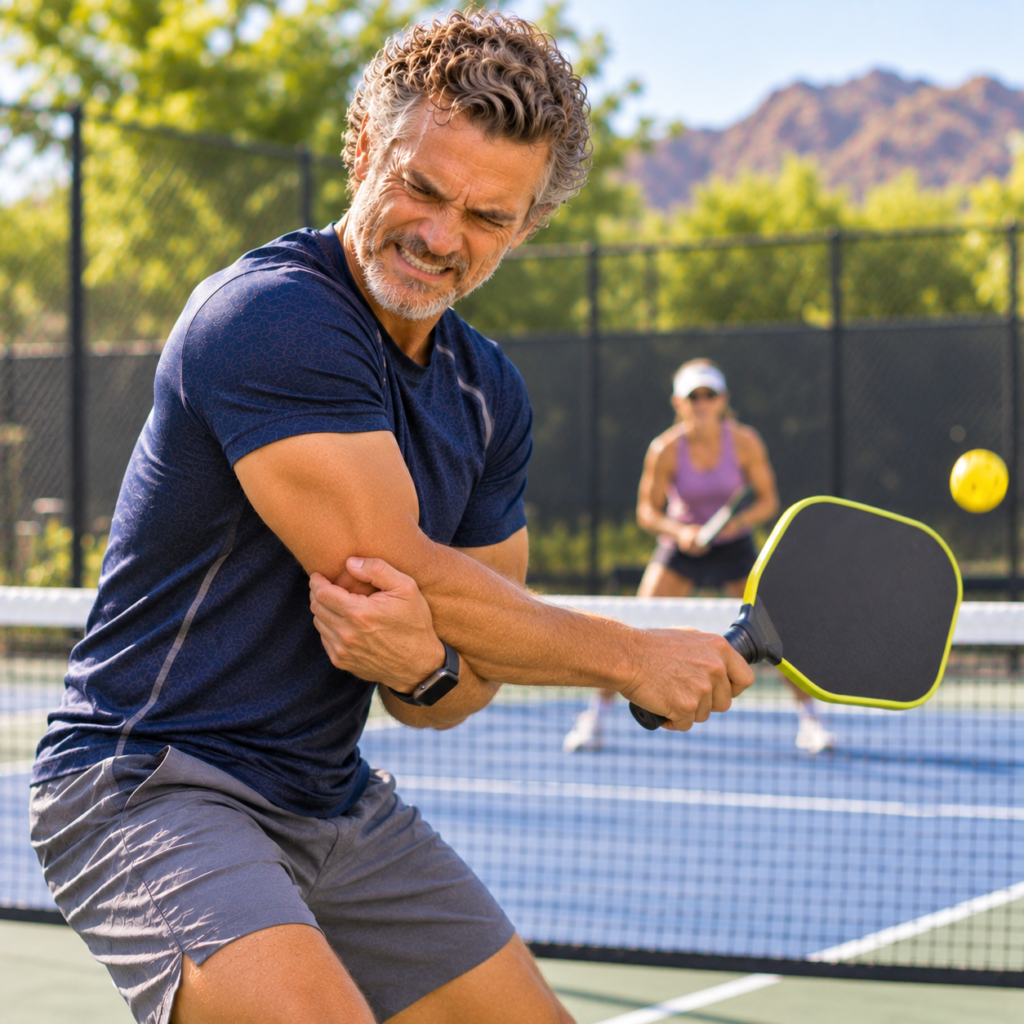
“Pickleball elbow” is what players call the fairly common ache along the outside of the elbow. It usually doesn’t come from one especially bad shot; instead, it builds over weeks of dinking, driving, and blocking. The pain often appears a couple of hours after a match. Soon, even small tasks can hurt: lifting a mug of coffee, turning a doorknob, carrying groceries, or shaking hands.
According to Rochester Regional Health, pickleball elbow is an overuse injury that inflames the tendons on the outside of the elbow, much like tennis elbow. Orthopedic surgeon Rami Elshaar, MD, attributes it to the repeated snapping motion of the wrist and forearm when striking the ball. The main symptom is persistent pain along the outer elbow that worsens with gripping or lifting. He also warns that playing through elbow pain keeps the tendons inflamed and prolongs recovery.
Orthopedic surgeon Chia Wu, MD, explains to Houston Methodist why the outer elbow takes the hit. The tendons that straighten the wrist and fingers all attach to a small bony point on the elbow’s outside, concentrating the force of every swing in one tiny area. Beginners who muscle the ball with their arms rather than drive it with their legs and core tend to overload those tendons most quickly, while flicking the wrist adds further strain.
Traditional Chinese Medicine describes two channels running along the outer forearm and elbow: the Large Intestine channel on the thumb side and the San Jiao channel along the middle of the back of the forearm. Thousands of repeated swings and a tight grip on the paddle can cause Qi and Blood to become stuck along these channels, resulting in fixed, aching pain precisely at the outer elbow. The Liver governs the tendons, and as Liver Blood naturally diminishes with age, the tendons lose some of their ability to recover between sessions.
The nine points begin at the outer elbow, trace the overworked forearm muscles toward the wrist, and end with two distal points that support the tendons and the entire arm.
What Acupressure Points to Press and Why
1. Press on LI11 at the outer elbow crease to relieve elbow pain. LI11 sits on the outer end of the elbow crease. Bend the elbow, and the point is in the hollow at the end of the crease, on the thumb side. Press firmly with your thumb for one to two minutes on the sore arm. LI11 is called “Quchi,” the “Pool at the Crook.”
In Traditional Chinese Medicine, LI11 is the primary local point for outer elbow pain. It lies just in front of the bony point where the wrist extensor tendons attach and is also traditionally used to clear heat, a Traditional Chinese Medicine concept associated with inflammation.
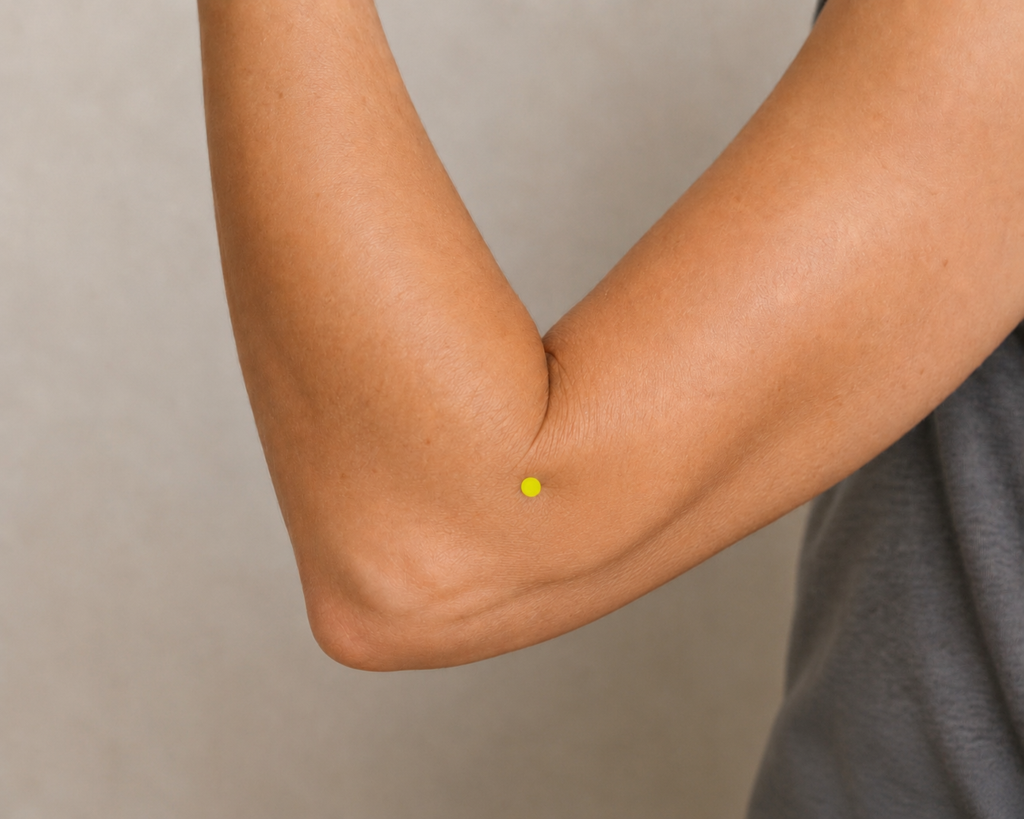
2. Press on LI12 just above the outer elbow to release the tendon attachment. LI12 sits just above and behind LI11, about one thumb-width up, along the outer edge of the upper arm bone. Press with moderate pressure for one to two minutes on the sore arm. LI12 is called “Zhouliao,” the “Elbow Crevice.”
LI12 sits right beside the outer bony point of the elbow, where pickleball elbow often occurs. It’s a classic point for elbow pain, stiffness, and difficulty straightening the arm.
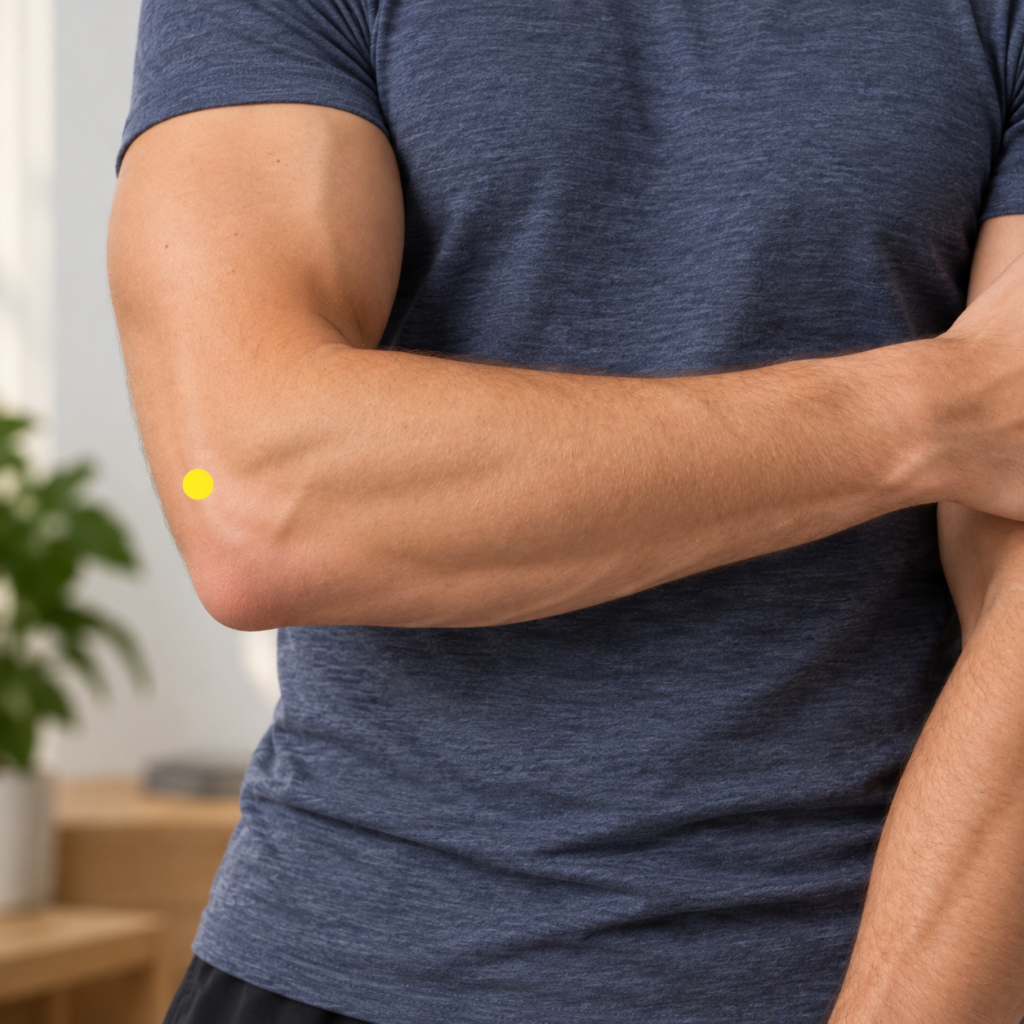
3. Press on LI10 on the forearm to relax the overworked muscles. LI10 sits on the thumb side of the forearm, about two thumb-widths below LI11, on the fleshy muscle that bulges when you make a fist. Press firmly with your thumb for one to two minutes on the sore arm. LI10 is called “Shousanli,” the “Arm Three Miles.”
LI10 is located on the wrist extensors, which contract with every grip and swing. It’s often quite tender in people with pickleball elbow, and steady pressure here can relieve the pull these muscles place on the tendon at the elbow.
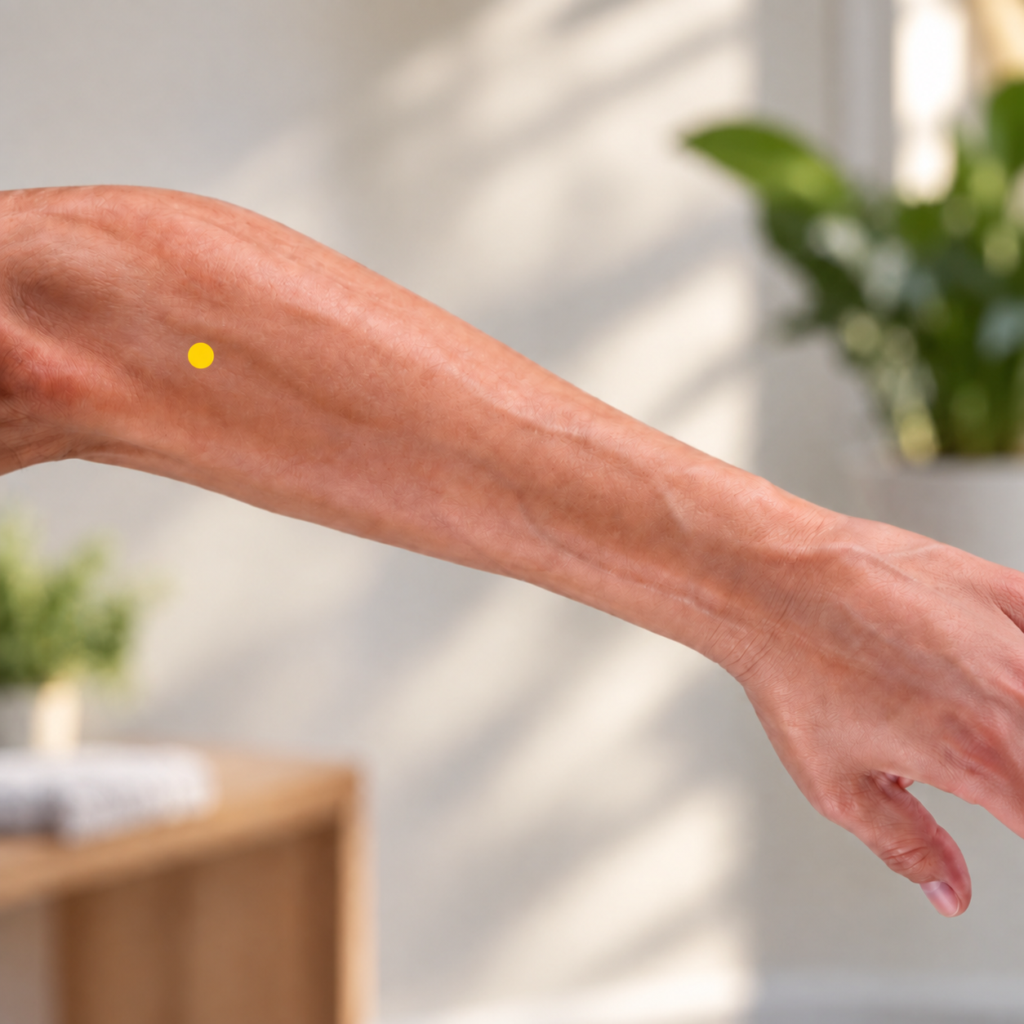
4. Press on TE10 at the back of the elbow to ease stiffness. TE10 sits on the back of the arm. Bend the elbow, then find the hollow about one thumb-width above the bony tip of the elbow. Press with moderate pressure for one to two minutes on the sore arm. TE10 is called “Tianjing,” the “Heavenly Well.”
TE10 lies on the San Jiao channel and is used to relieve stiffness and pain along the back and outer side of the elbow. It can help when the elbow feels tight first thing in the morning or after a long session.
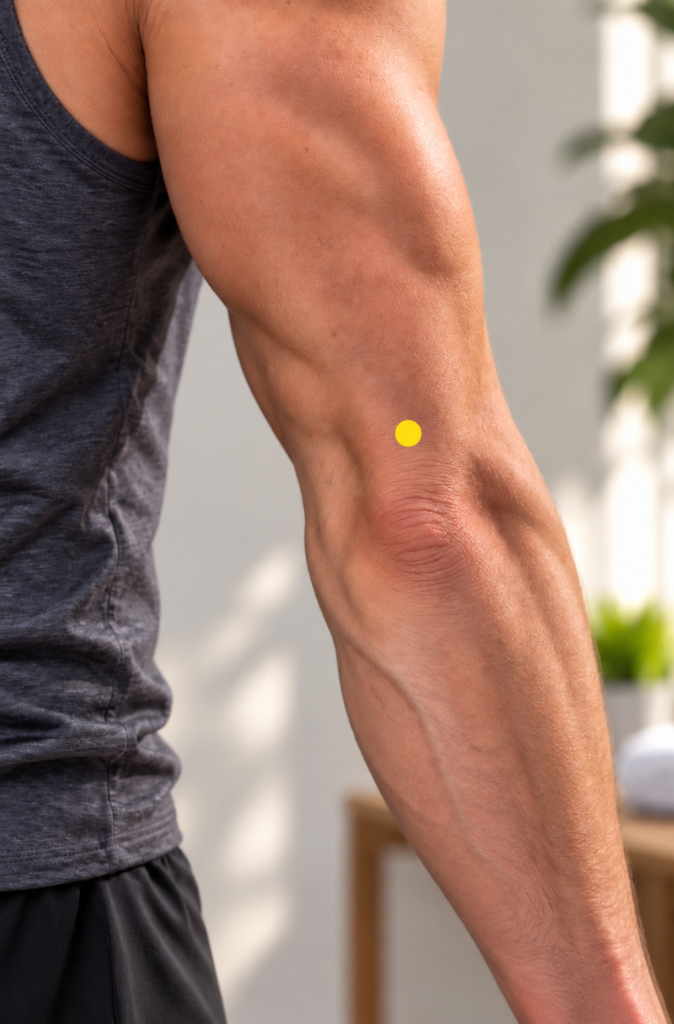
5. Press on LU5 at the inner elbow crease to loosen the joint. LU5 sits on the elbow crease, just to the thumb side of the firm tendon in the middle of the crease, which is easy to feel with the elbow slightly bent. Press with moderate pressure for one to two minutes on the sore arm. LU5 is called “Chize,” the “Cubit Marsh.”
LU5 is used for pain in the elbow and forearm, as well as when an arm won’t fully straighten. It works on the joint from the front, balancing the points on the outer elbow.
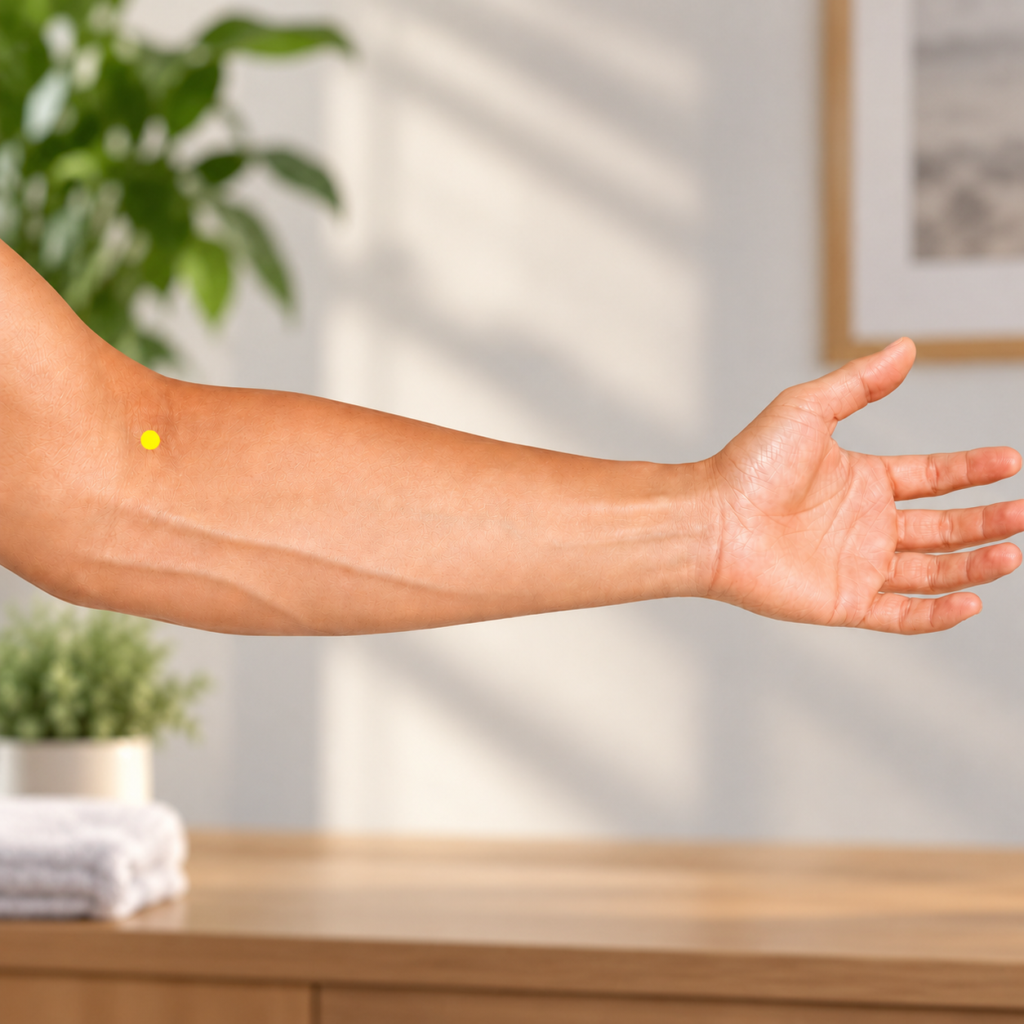
6. Press on TE5 on the back of the forearm to ease the strain of gripping. TE5 sits on the back of the forearm, about three finger-widths above the wrist crease, in the groove between the two forearm bones. Press firmly with your thumb for one to two minutes on the sore arm. TE5 is called “Waiguan,” the “Outer Pass.”
TE5 lies over the muscles that straighten the fingers and wrist. It helps relax a forearm that’s been gripping a paddle for hours.
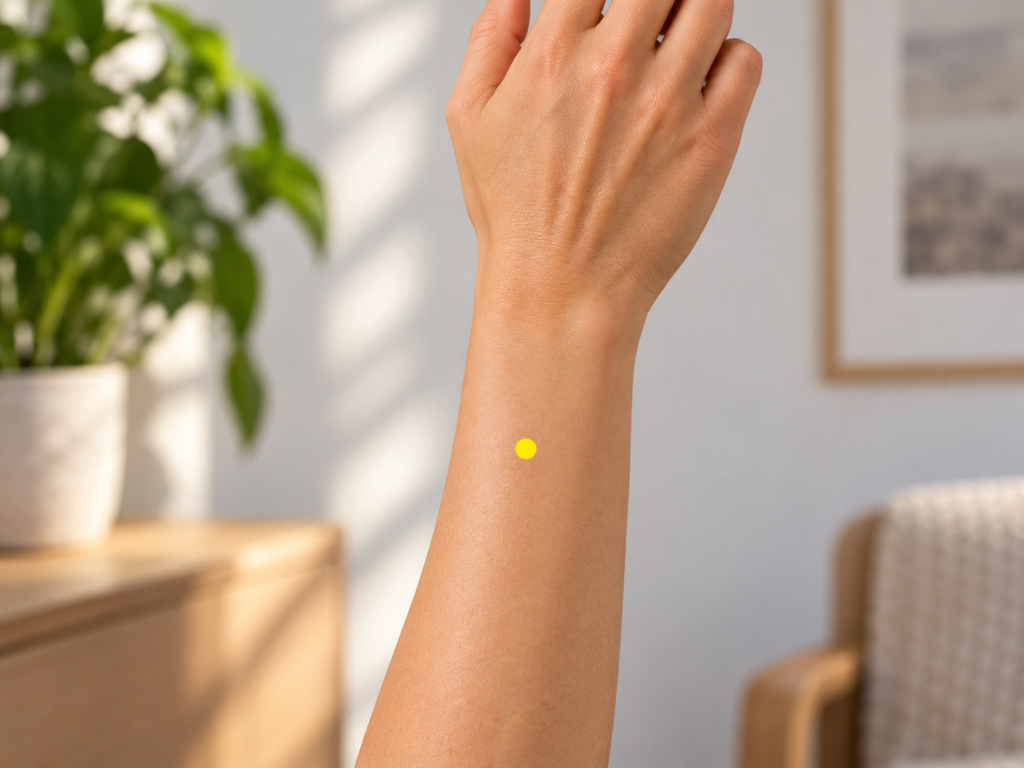
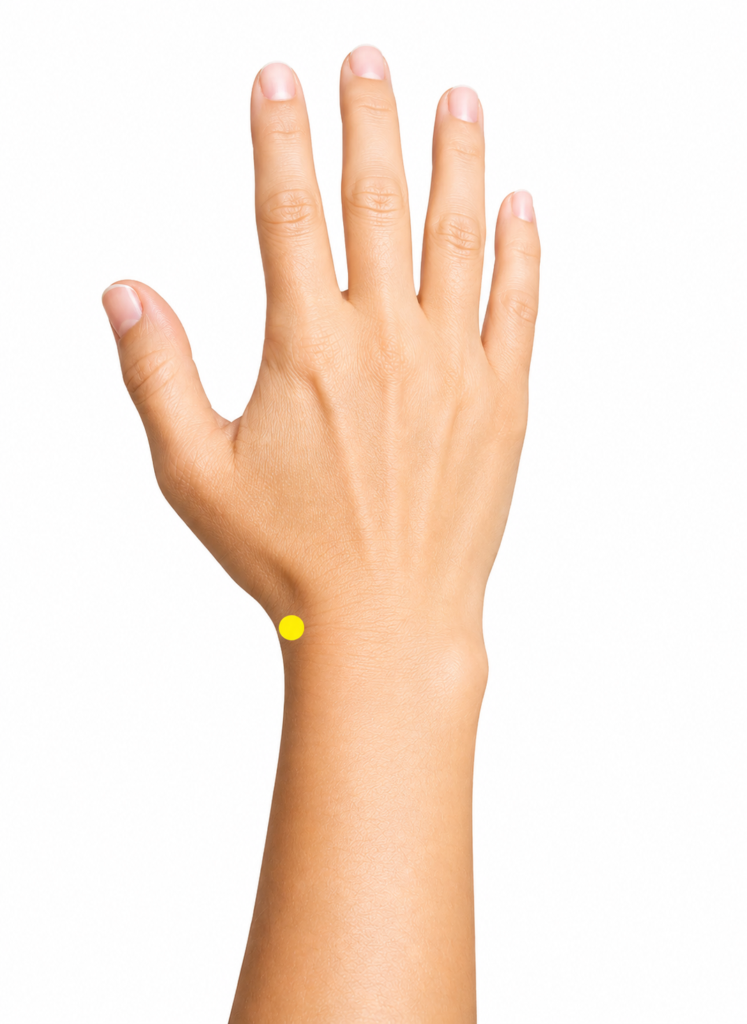
7. Press on LI5 at the wrist to calm the wrist-snapping strain. LI5 sits on the thumb side of the back of the wrist. Lift the thumb up and back, and the point is in the small hollow that forms between the two tendons at the base of the thumb. Press with moderate pressure for one to two minutes on the sore arm. LI5 is called “Yangxi,” the “Yang Stream.”
LI5 lies at the wrist end of the same Large Intestine channel that runs across the outer elbow. Since pickleball elbow is caused by repetitive wrist snapping, relieving tension in the wrist can reduce strain on the elbow.
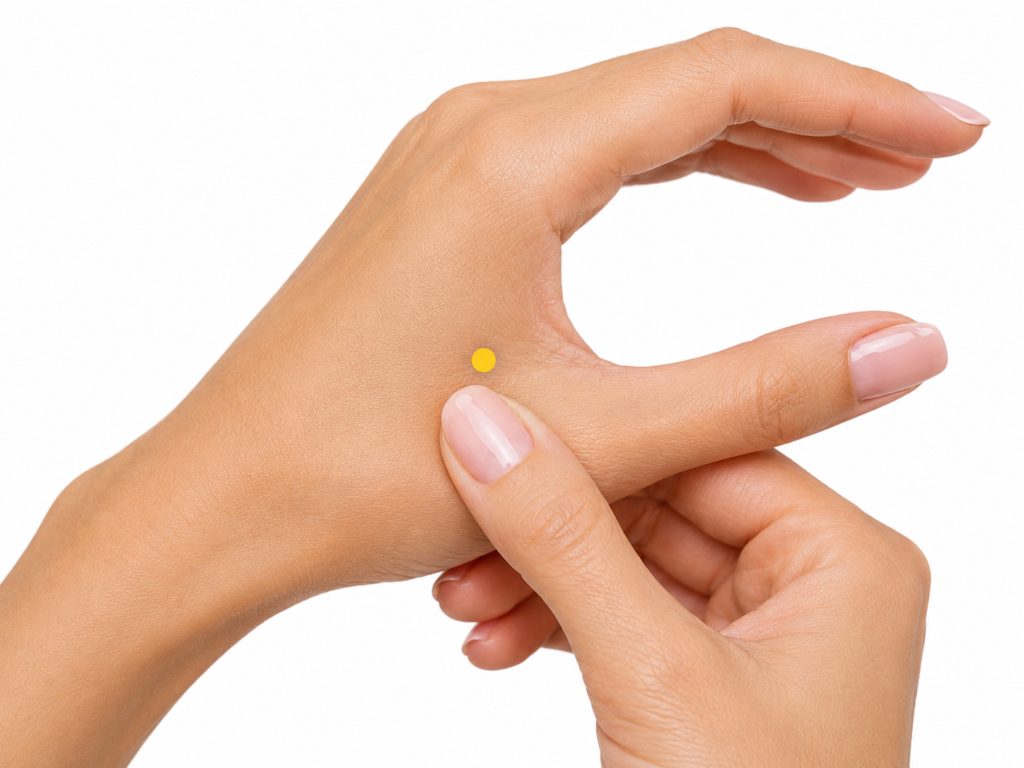
8. Press on LI4 on the back of the hand to relieve pain along the arm. LI4 sits in the webbing between the thumb and index finger, at the highest point of the muscle when the two are pressed together. Press firmly with the thumb of your other hand for one to two minutes on each hand. LI4 is called “Hegu,” the “Joining Valley.” LI4 is avoided during pregnancy.
LI4 is the go-to point for pain anywhere along the Large Intestine channel, from the hand to the elbow and shoulder. It can also help release grip tension that builds during long rallies.
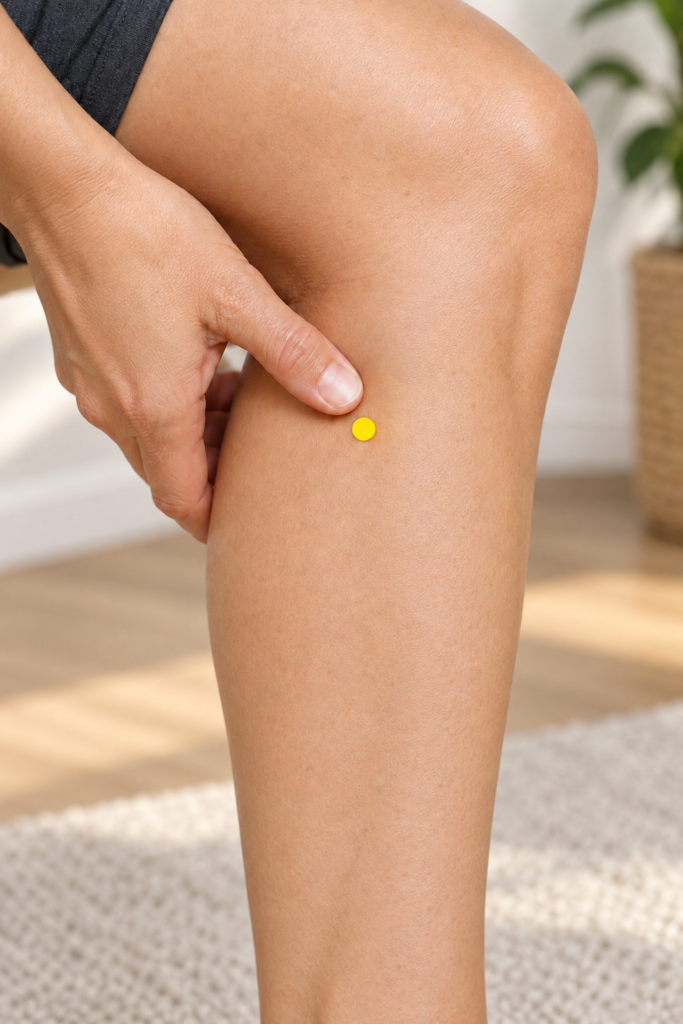
9. Press on GB34 below the outer knee to support the tendons. GB34 sits on the outer lower leg, in the hollow just in front of and below the small bony knob below the outer knee. Press firmly with your thumb for one to two minutes on each leg. GB34 is called “Yanglingquan,” the “Yang Mound Spring.”
In Traditional Chinese Medicine, GB34 is the influential point for the tendons and is used to treat tendon strain anywhere in the body. For pickleball elbow, it can support tendon healing from a distance while the elbow is at rest.
Why These Acupressure Points Work
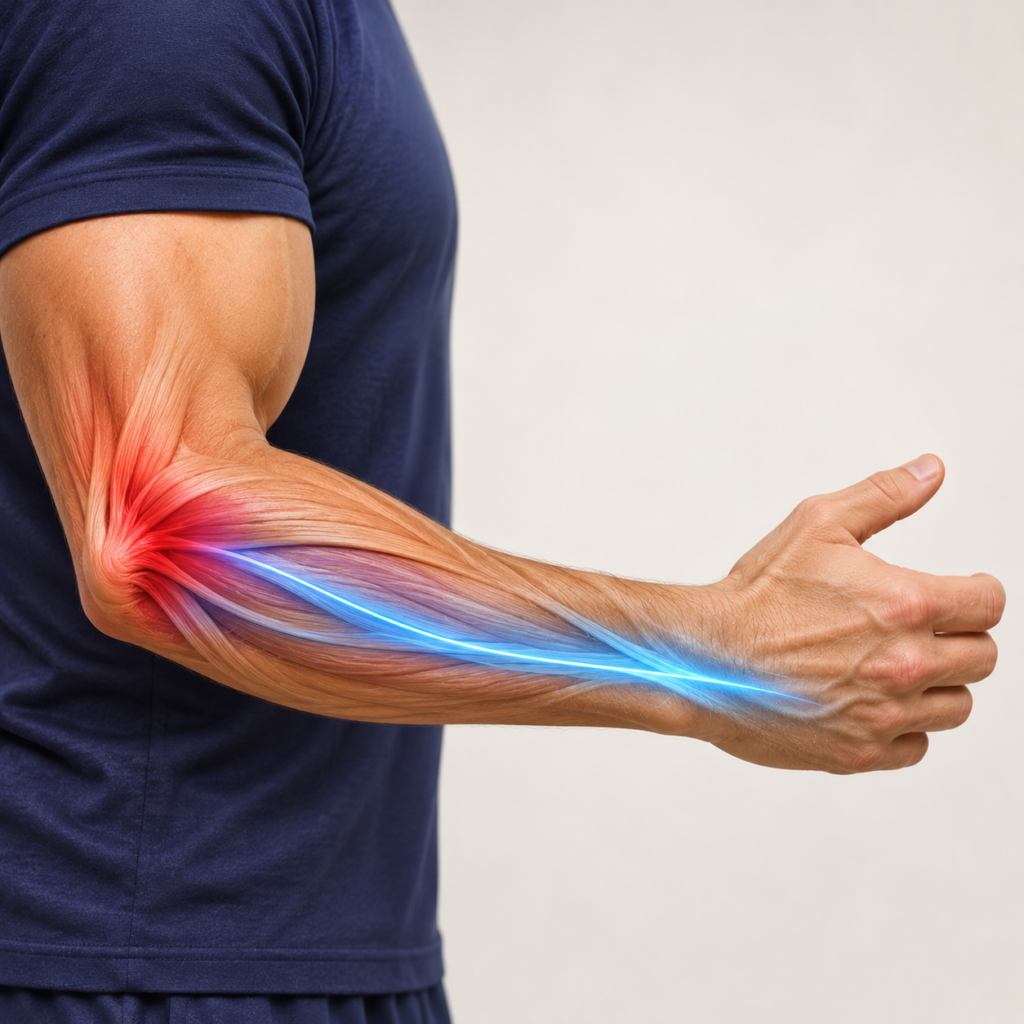
From a Traditional Chinese Medicine perspective, pickleball elbow is a local blockage caused by repetition. Each grip and swing strains the same small tendon attachment, and over time, Qi and Blood become blocked in the channels that cross it. When the tendons aren’t well nourished by Blood, they heal very slowly. Treatment focuses on moving what’s stuck at the elbow, relaxing the muscles that pull on it, and supporting the tendons from within.
The nine points work together to relieve the strain on the outer elbow, extending from the joint to the hand:
- LI11, LI12, and TE10 surround the outer and back of the elbow and ease local pain.
- LU5 loosens the elbow joint from the front.
- LI10, TE5, and LI5 relax the forearm muscles and tendons that pull on the elbow.
- LI4 and GB34 relieve pain along the arm and support tendon healing.
How to Properly Use These Acupressure Points
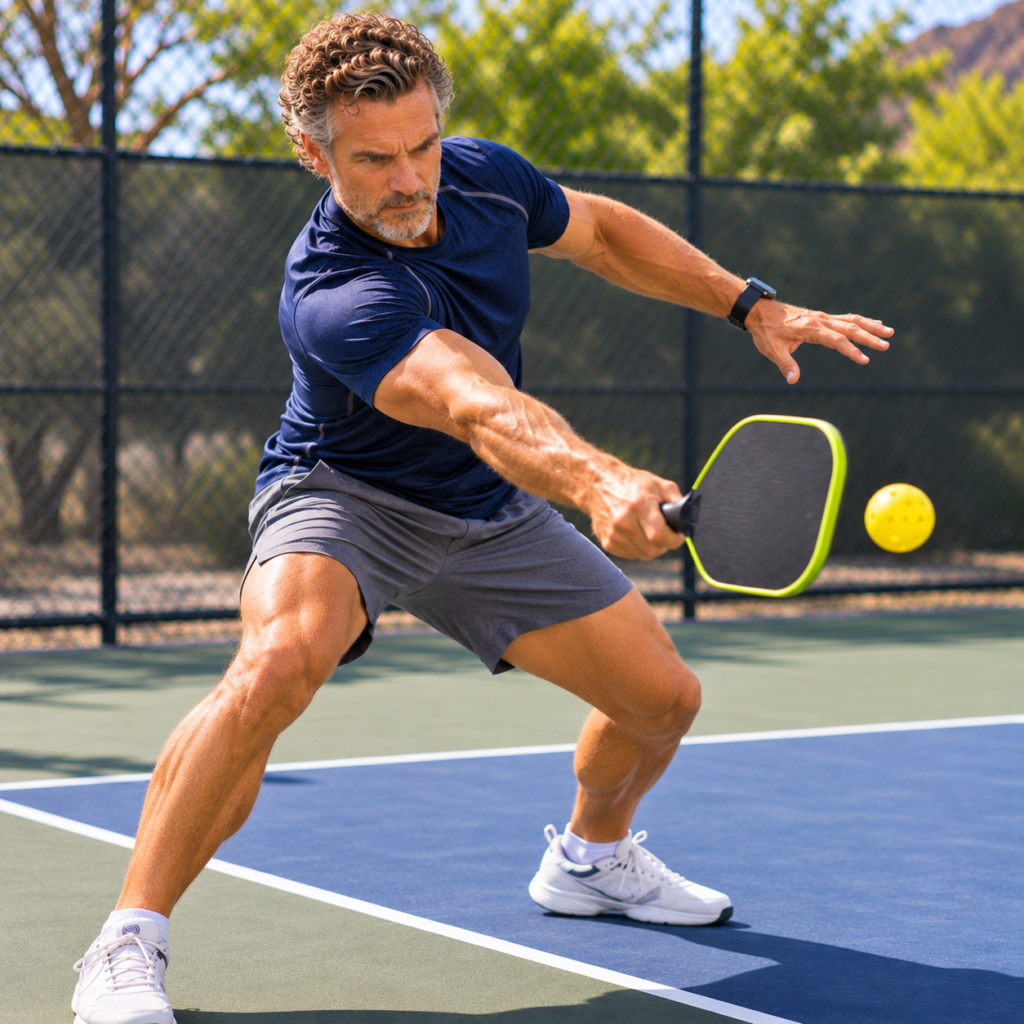
Acupressure for pickleball elbow is most effective after playing and on rest days, giving the tendons time to recover.
- After playing, rest the forearm on a table with the elbow slightly bent, then work LI11, LI12, LI10, and TE10 for one to two minutes each.
- Continue down the forearm to TE5 and LI5, then finish with LI4 on both hands and GB34 on both legs.
- Apply moderate pressure around the elbow, where the tendon is tender, and firmer pressure to the forearm muscle, hand, and leg.
- Repeat once or twice a day for at least four to six weeks, because tendons heal more slowly than muscles.
The biggest differences in pickleball elbow come down to how you hold and swing the paddle. Keep your grip relaxed, firm enough to maintain control but loose enough to avoid straining your forearm. Drive your shots with your legs and core, rotating through your torso while keeping your wrist steady rather than flicking it. Get into position early so your arm does not have to reach. Before playing, warm up with light cardio, wrist and forearm stretches, and practice swings that gradually build in intensity. Once the pain has settled, strengthen your forearm, grip, and shoulder about twice a week. Wearing a counterforce strap just below the elbow can reduce strain on the tendon. Stop playing if the pain becomes sharp, since playing through it can keep the tendon inflamed.
Learn more about arnica as a natural alternative to NSAIDs.
When to Get Professional Help
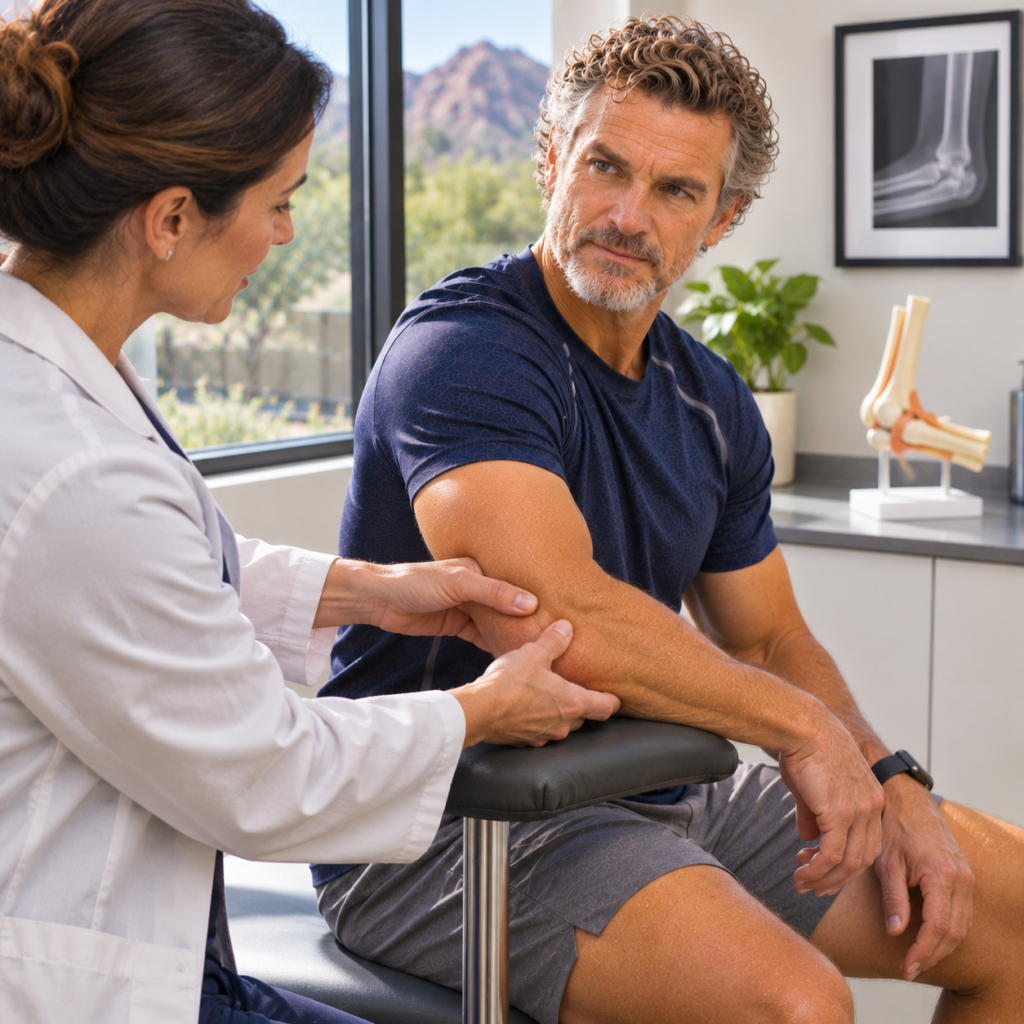
See a doctor or orthopedist if your elbow pain persists for more than a few weeks despite rest, progressively worsens, or makes it difficult to grip, lift, or hold a cup. Seek medical care if you experience numbness or tingling that radiates into your fingers, particularly the ring and little fingers, noticeable hand weakness, or an elbow that will not bend or straighten. Get immediate medical attention if your elbow is swollen, bruised, or deformed after a fall, or if the back of your elbow is red, hot, and swollen, especially if you have a fever. These symptoms could indicate a fracture or an infected bursa.
Acupressure is a gentle, supportive practice for pickleball elbow. It complements, and does not replace, diagnosis and medical care.
For related health concerns, acupressure for tennis elbow, acupressure for golfer’s elbow, acupressure for pickleball knee pain, and top acupressure points for pickleball players are companion articles. If the pain travels down into the wrist, learn about acupressure for wrist pain.
Other posts in the pickleball series include acupressure for pickleball shoulder pain, acupressure for pickleball wrist pain, acupressure for pickleball ankle pain, acupressure for pickleball back pain, acupressure for pickleball knee pain, and top acupressure points for pickleball players.
Above and Beyond Acupuncture offers acupuncture, cupping, and lifestyle coaching at the North Frank Lloyd Wright Boulevard location in Scottsdale.
Schedule an appointment online to start your healing journey.
The points above are only as effective as the technique used to apply them. Where to press, how firmly, and for how long all affect the result. For a full breakdown of how to perform acupressure properly at home, read Performing Acupressure in 3 Easy Steps.
About the Publisher
Paul Kerzner, L.Ac., is a licensed acupuncturist and board-certified herbalist, as well as the founder of Above and Beyond Acupuncture in Scottsdale. His own journey from chronic patient to practicing acupuncturist shapes his commitment to providing honest, clinically grounded information about acupuncture and Traditional Chinese Medicine. Learn more about Paul and his clinical approach on the About Us page.